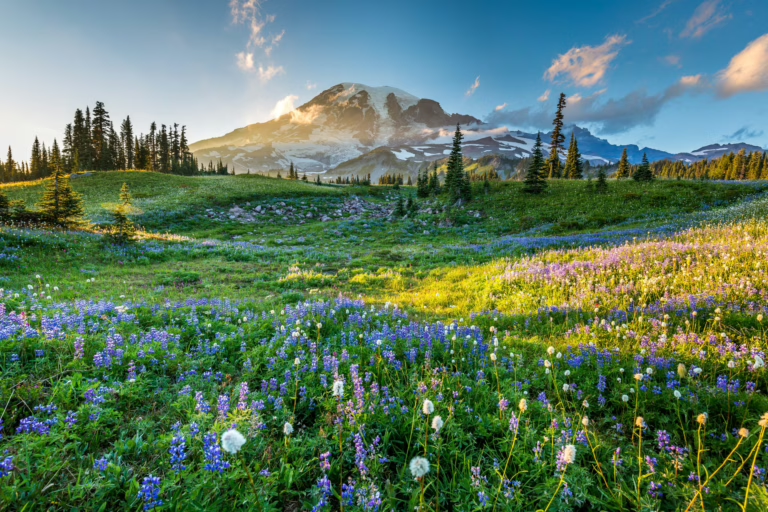
Without a doubt, the US national park system is one of the crown jewels of our home country. Home to everything from white sand beaches to otherworldly glaciers, the breadth, depth, and extreme diversity of the best national parks in the USA is a delight to behold, and we will never get tired of visiting them!
Exploring all 63 (and counting!) national parks, plus the hundreds of other properties run by the National Park Service, is a lifelong project for even the most fervent lovers of the parks.
The scope of exploring every last one of the national parks in America is positively overwhelming: visiting every US national park even requires some long flights across the Pacific Ocean (and I don’t just mean Hawaii, either: visiting the National Park of American Samoa is quite an undertaking for most of us).
To help you narrow down your options, start planning some trips, and maybe even add a park or two that you haven’t considered in the past to your bucket list, we’ve teamed up with several other travel bloggers to round up some of the most beautiful national parks in the US.
While visiting these 25 national parks across America won’t show you every part of our national park system, it will do an excellent job of showcasing just how much diversity the parks have to offer.
From sea to shining sea, here are the top United States national parks that you can’t miss, starting with a round-up of the five most visited national parks in the USA!
Table of Contents
First Step: Pick Up an America the Beautiful Pass!
Planning to explore several of the best national parks in the USA over the next year?
If so, consider picking up an America the Beautiful Pass, also known as the USA’s annual national parks pass!
For only $80 (less for certain groups like seniors and military personnel), the pass covers day-use fees to over 2,000 federally managed lands, including all 63 national parks, for an entire year.
It’s one of the best travel deals around, and it will pay for itself within 3-4 visits to popular US national parks (for example, as of the time of writing, many popular national parks such as Arches and Yosemite cost between $25-35 per vehicle to visit).
Buy your national parks pass today!
Top 5 Most Visited National Parks in the USA
Based on 2019 visitor numbers, here are the most visited national parks in America!
2026 Update: These parks fluctuate from year to year. In 2025, Rocky Mountain NP dipped to #6, and was edged out by Yellowstone NP at #3.
I had noted when I originally published this blog post that I was surprised Yellowstone didn’t make the top 5. Just goes to show, it depends a bit on the year!
It’s safe to say that these parks are virtually always in the top 10, though:

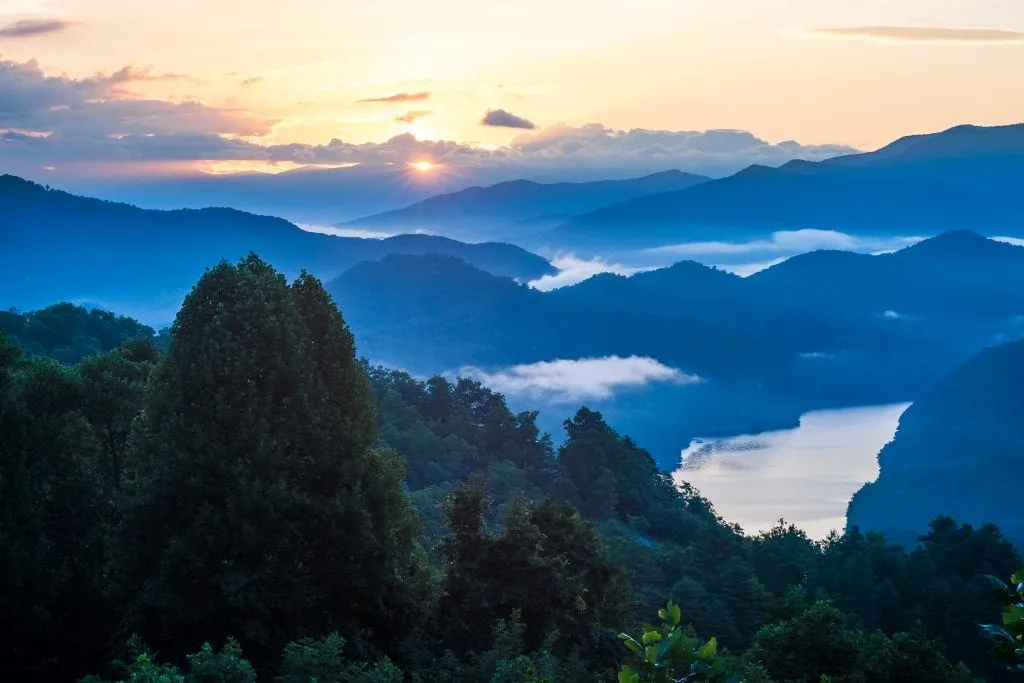
Great Smoky Mountains National Park, North Carolina & Tennessee
From Stephanie of Explore More, Clean Less
Great Smoky Mountains National Park is the most visited national park in the United States, for good reason!
This park is easily accessible from several airports, has free admission, and offers lots of wildlife viewing opportunities within an hour’s drive of several major cities.
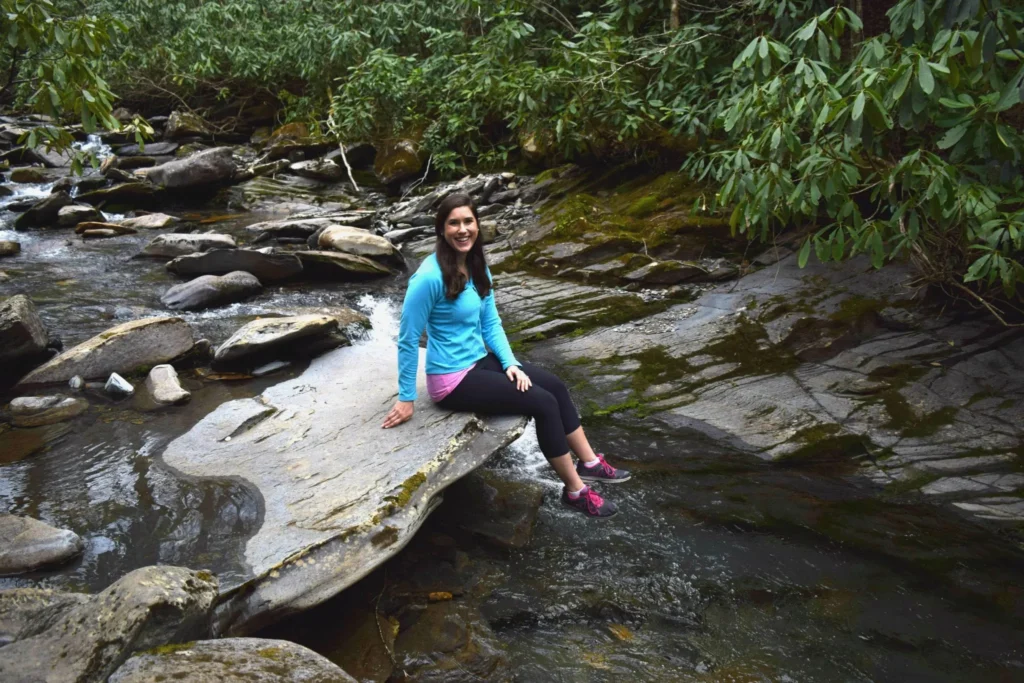
Visitors can look forward to seeing black bears, elk, otters, or salamanders. Don’t miss walking up Clingman’s Dome to see for miles, visiting one of the many waterfalls in the area (Rainbow Falls is a great option!), or driving through the iconic Cades Cove Loop with stops for rustic cabin history and wildlife spotting.
To get closer to nature, there are over 150 hiking trails to choose from in a wide range of difficulty levels, you can pick one of the most popular beginner-friendly hikes in the Smokies to get started!
When to Visit
In the relatively temperate climate of eastern TN/western NC, there isn’t a bad season to visit GSMNP. The park is technically located in a temperate rainforest!
Spring brings a bounty of wildflowers, summer has lush greenery and roaring waterfalls, fall brings beautiful foliage and rutting elk, and winter has frozen creeks and snowy mountain views.
Some areas of the park may close during winter, so keep winter plans flexible and refundable if possible.
Grand Canyon National Park, Arizona
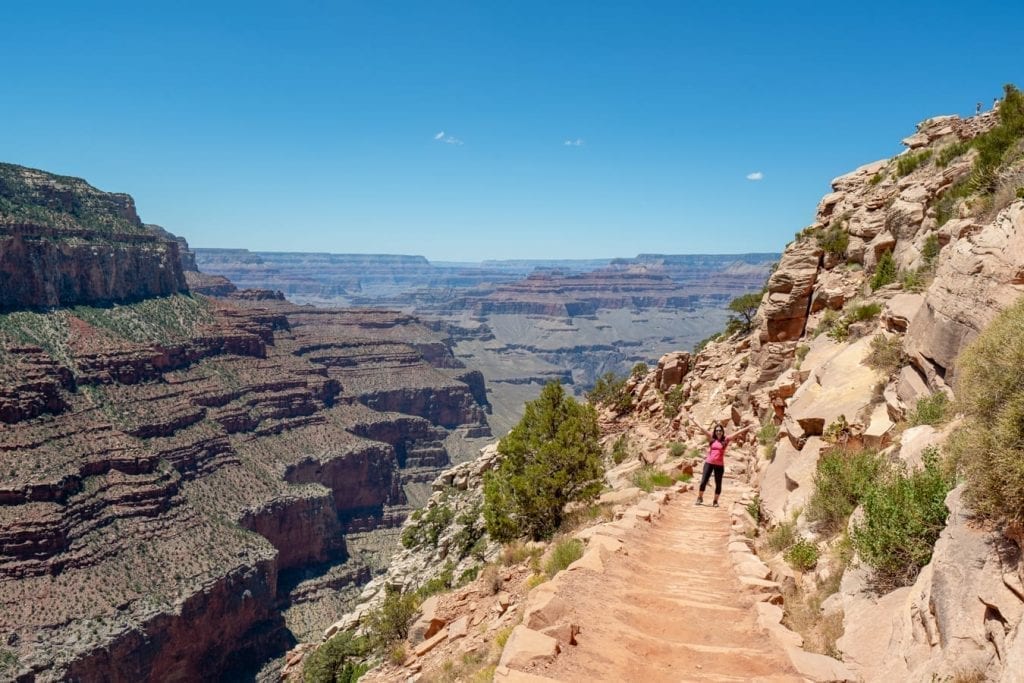
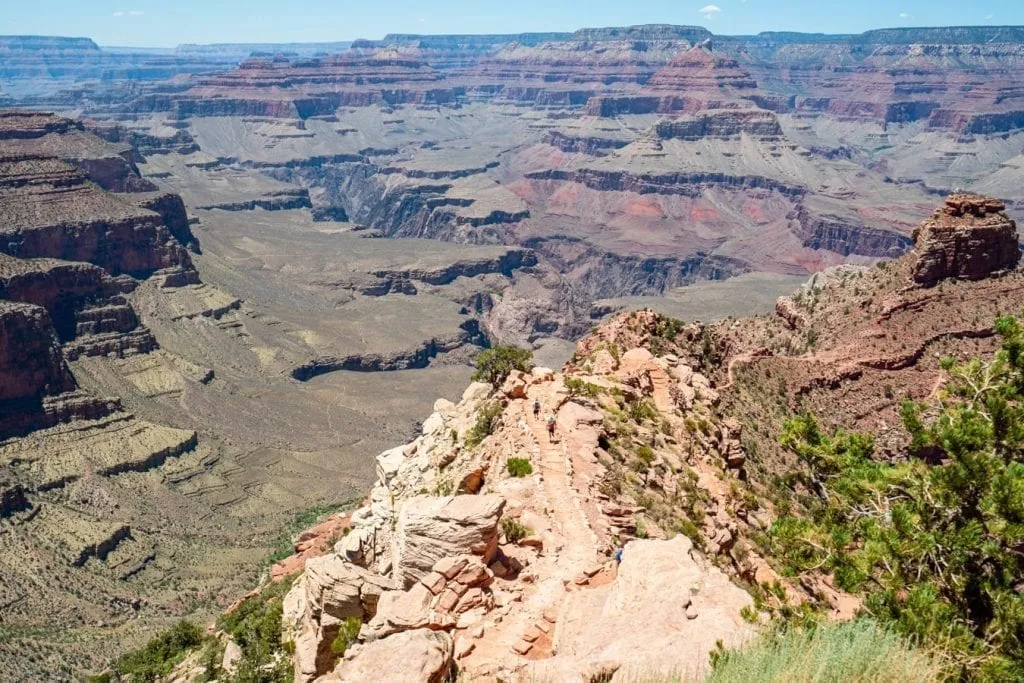
One of the most famous national parks in the USA by a landslide, the aptly-named Grand Canyon is the largest canyon in the United States.
Meticulously carved by the Colorado River over the last several million years, Grand Canyon National Park is one of those places that you simply have to see to believe: pictures, however beautiful, fail to do it justice.
Grand Canyon National Park is divided into two sections, the more-famous South Rim and the lesser-visited North Rim.
While the North Rim is beautiful, for the iconic Grand Canyon views, head to the South Rim.
Hiking to the floor of the Grand Canyon is an arduous task, and the National Park Service strongly warns against hiking from the rim to the river and back in one day.
However, the South Rim still has plenty of challenging and beautiful day hikes to choose from, including on the popular South Kaibab and Bright Angel trails.
When to Visit
The Grand Canyon is accessible and beautiful year-round.
Summer and winter both bring challenges for hiking.
The brutal heat of summer, and potentially icy conditions paired with shorter days in winter, mean that extreme caution is required when descending into the canyon in either season.
However, both are beautiful, and we wouldn’t recommend turning down an opportunity to visit the Grand Canyon, regardless of what month it presents itself.
Rocky Mountain National Park, Colorado
From Meg of Fox in the Forest
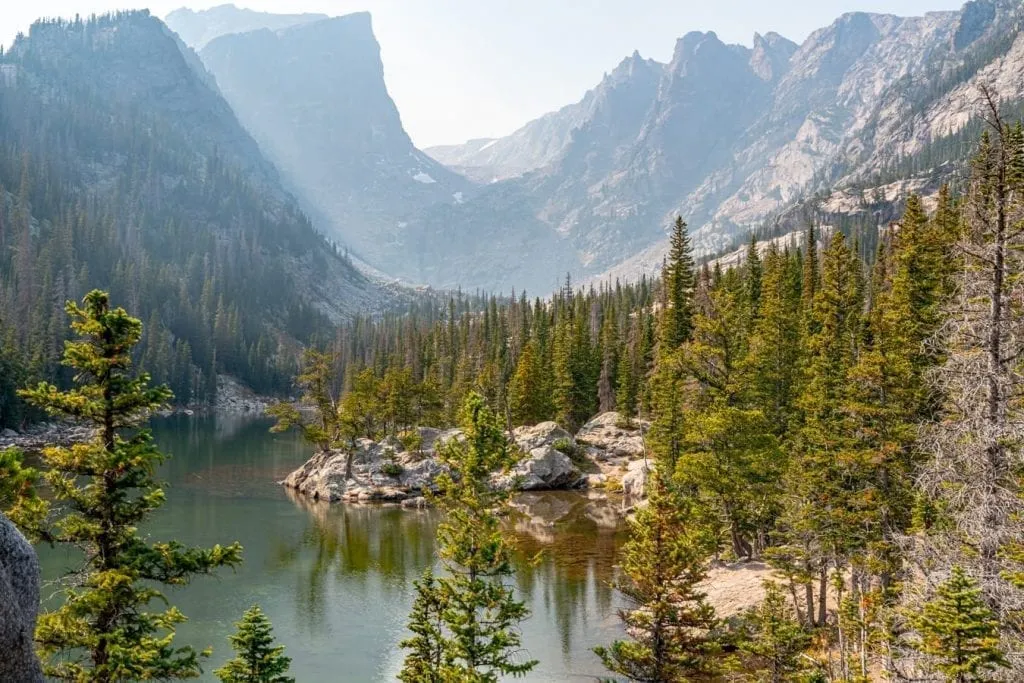
If you’re looking for a high-alpine adventure, look no further than Rocky Mountain National Park.
Featuring stunning mountain scenery from rich pine forests to the Continental Divide, there’s a reason that RMNP is one of the most visited national parks in the United States.
Start by exploring one of the best hikes in Rocky Mountain National Park.
For beginners and experts alike, there are endless miles of gorgeous trails and even world-famous mountains to climb. Long’s Peak is on many alpinists’ bucket lists, while Dream Lake, Gem Lake, and Sky Pond are all bucket list hikes.
A signature activity in Rocky is to drive the scenic Trail Ridge Road. With plenty of pullouts and endless amounts of wildlife, you can easily spend the day traveling this beautiful road.
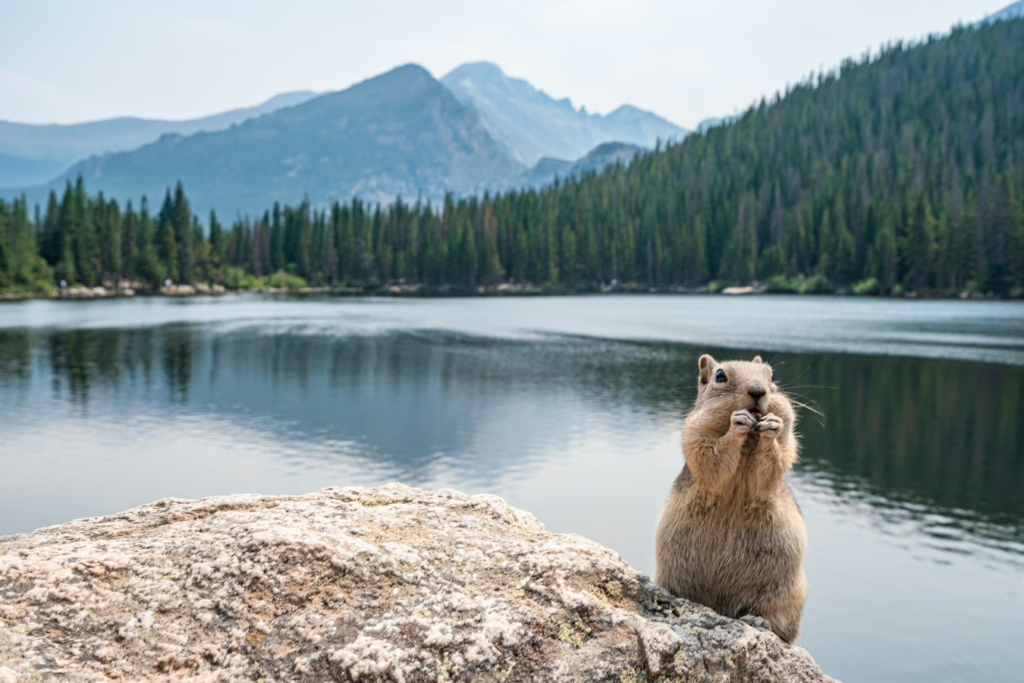
Speaking of wildlife, during the summer months it’s quite common to see chipmunks, marmot, pika, elk, moose, coyote, ram, and maybe even a black bear. Bring your camera, but keep a good distance between you and the wildlife (elk are known to charge).
Other activities include rock climbing, visiting scenic vistas, and backpacking.
Aside from the main (east) side of the park, there are plenty of auxiliary areas to discover, including Lumpy Ridge, Wild Basin, and the Long’s Peak area. The west side of the park is also plenty beautiful but sees fewer visitors.

When to Visit
The best time of year to visit the park is between July and September. Keep in mind, this park is no secret, so it’s also the busiest time in RMNP and in nearby Estes Park.
Expect to wait in long lines or be required to take a shuttle, as most of the parking lots fill up by 6:00 AM.
Signing up for a pre-arranged timed entry slot is also required from mid-May to mid-October, and whether or not you have a timed entry slot that includes Bear Lake Road will affect which trails you have access to.
Winter and spring are also excellent times to visit, however, Trail Ridge Road is usually closed and lots of the trails become dangerous due to avalanche activity.
Zion National Park, Utah
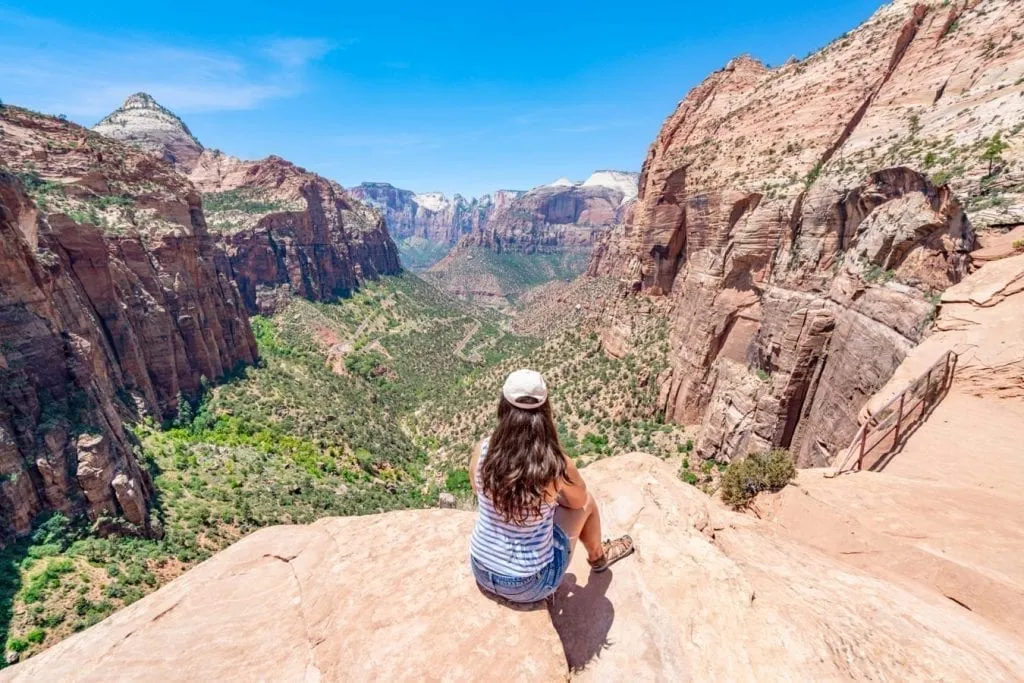
Home to some of the most legendary hikes in the United States, stunning Zion National Park is the most-visited of Utah’s Mighty Five National Parks.
Surrounding Zion Canyon and the Virgin River, Zion National Park is incredibly beautiful, combining the craggy, bright orange landscapes synonymous with the southwest with somewhat more lush views.
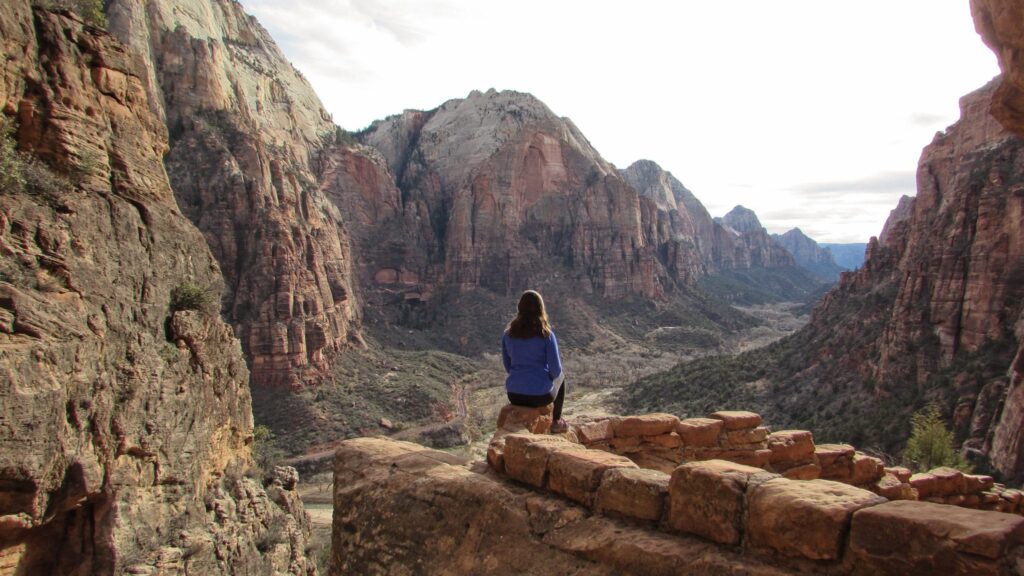
The best-known hikes in Zion NP include Angel’s Landing, the Narrows, and the Subway. All are magnificent and extremely different from each other. All require permits in certain circumstances.
Angel’s Landing severely tests hikers’ fears of heights and the Narrows involves hiking through a river, making them both extremely memorable!
Other popular trails include the Canyon Overlook trail, Observation Point, and the Emerald Pools trails.
When to Visit
Zion National Park is stunning year-round, with extreme heat to contend with in the summer and some snow and ice to deal with in the winter.
The biggest factor in deciding when to visit Zion NP, though, is crowds.
Zion is generally one of the most crowded national parks in America, and the Zion Scenic Drive is even closed to private vehicles for most of the year (you can drive yourself to the most popular hikes during the winter, otherwise, prepare to use Zion’s shuttle system).
For this reason, strongly consider planning a trip outside the busy summer months!
Yosemite National Park, California
From Kelsey of Sights Better Seen
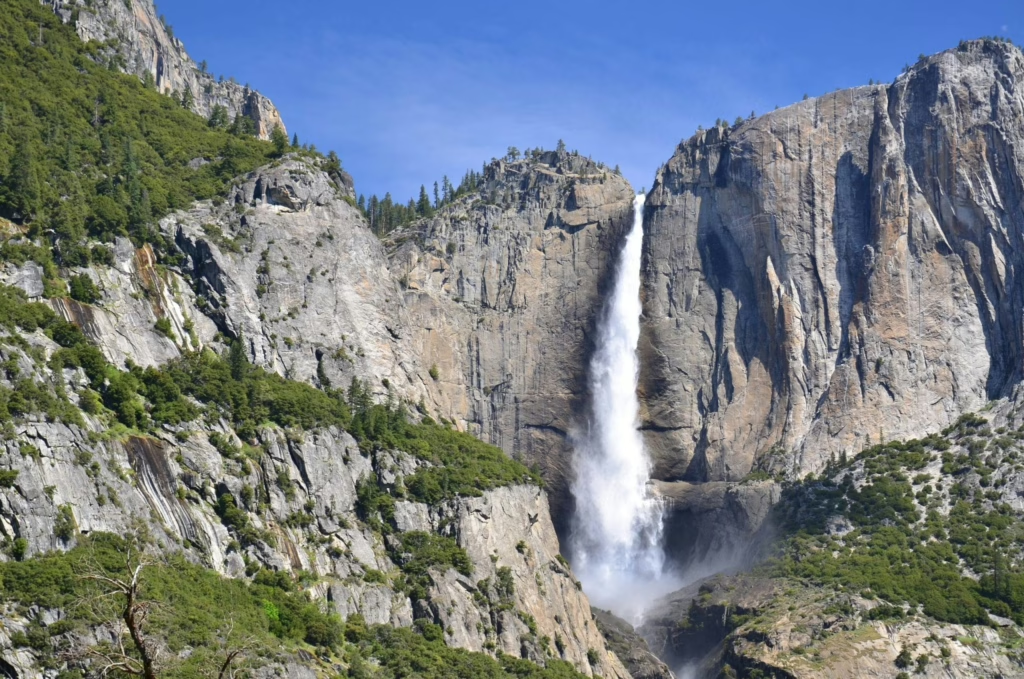
Yosemite National Park is one of the most beloved jewels of the US national park system, and undoubtedly one of the most beautiful places in California (which is extremely high praise).
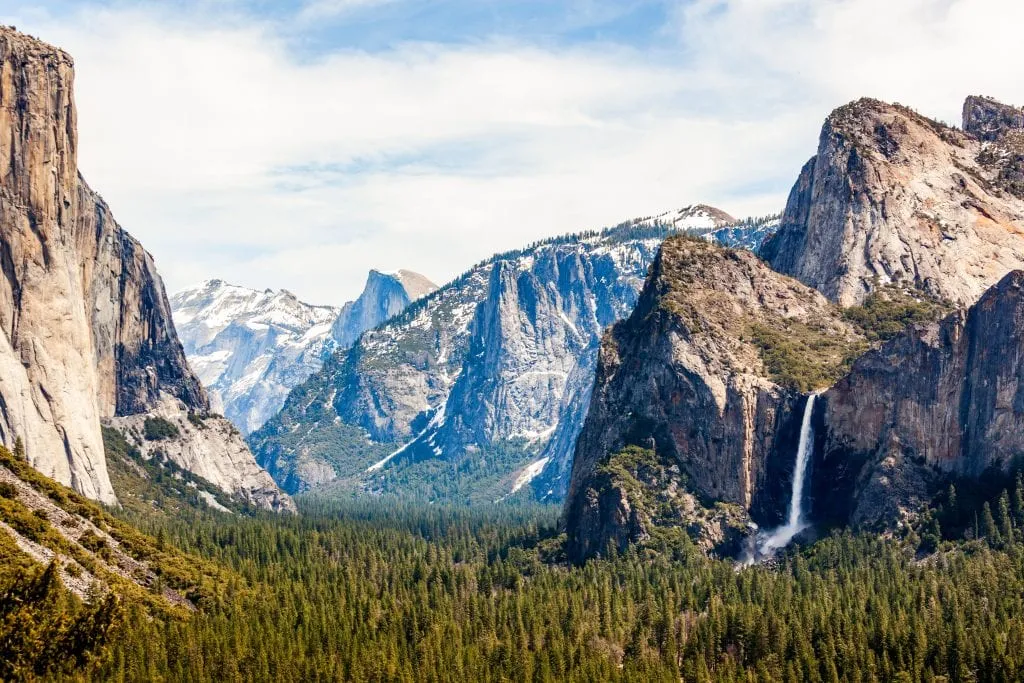
The towering granite cliffs, giant sequoias, and thundering waterfalls are awe-inspiring and make for an unforgettable experience.
There are plenty of trails, and popular hikes include the Mist Trail leading to Vernal Fall (be prepared to get wet) and Nevada Fall, Yosemite Falls, Bridalveil Fall, Mirror Lake Loop, and if you manage to score a ticket in the lottery, Half Dome.
Watch climbers going up El Capitan, stare in awe at giant sequoias in Mariposa Grove, or drive up to Glacier Point to take in the view. If you happen to visit Yosemite in winter, take the shuttle up to Badger Pass Ski Area and ski, snowboard, or snowshoe!
When to Visit
Most people visit in the summer, but it can be packed with people. To avoid the crowds, go in the spring, preferably May or June to avoid the likelihood of snow (although it is still possible!).
The waterfalls will be flowing, there will be fewer tourists, and the temperatures should be comfortable.
Fall also comes with mostly perfect temperatures and fewer crowds, but it may be risky considering California’s late summer and early fall have seen severe wildfires in the past few years.
Winter is beautiful and also less crowded, just be prepared for the snow (and the possibility of canceling due to a snowstorm), and be sure to carry chains!
As of 2026, Yosemite is no longer using a timed-entry reservation system.
Best West Coast National Parks in the USA
Olympic National Park, Washington
From Sarah of Live, Dream, Discover
Dreamy and wild Olympic National Park is located on the Olympic Peninsula of Washington state.
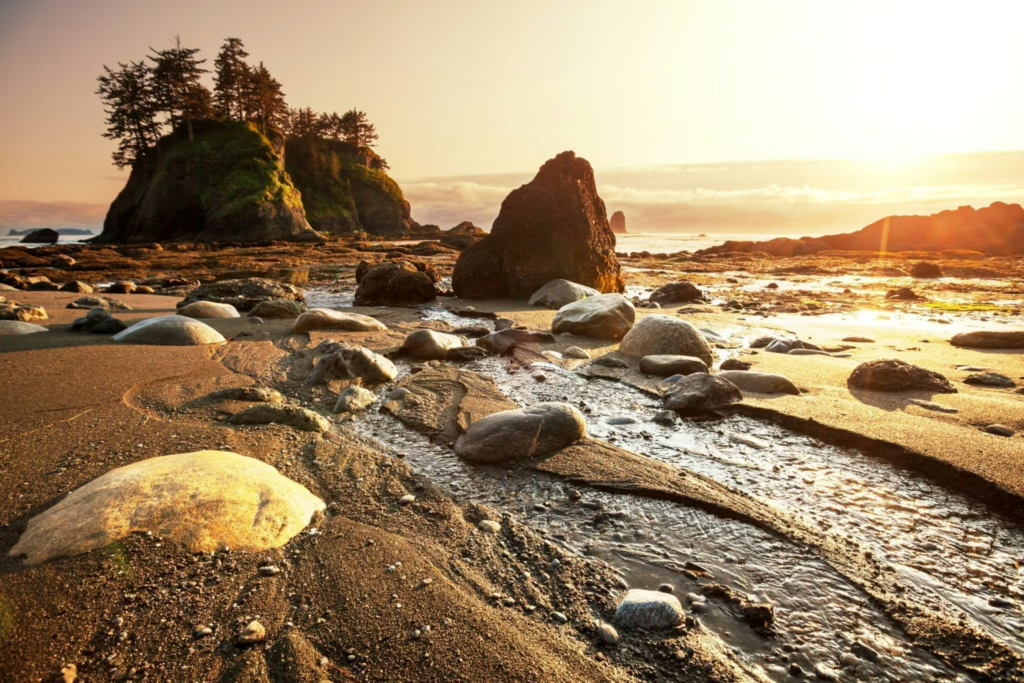
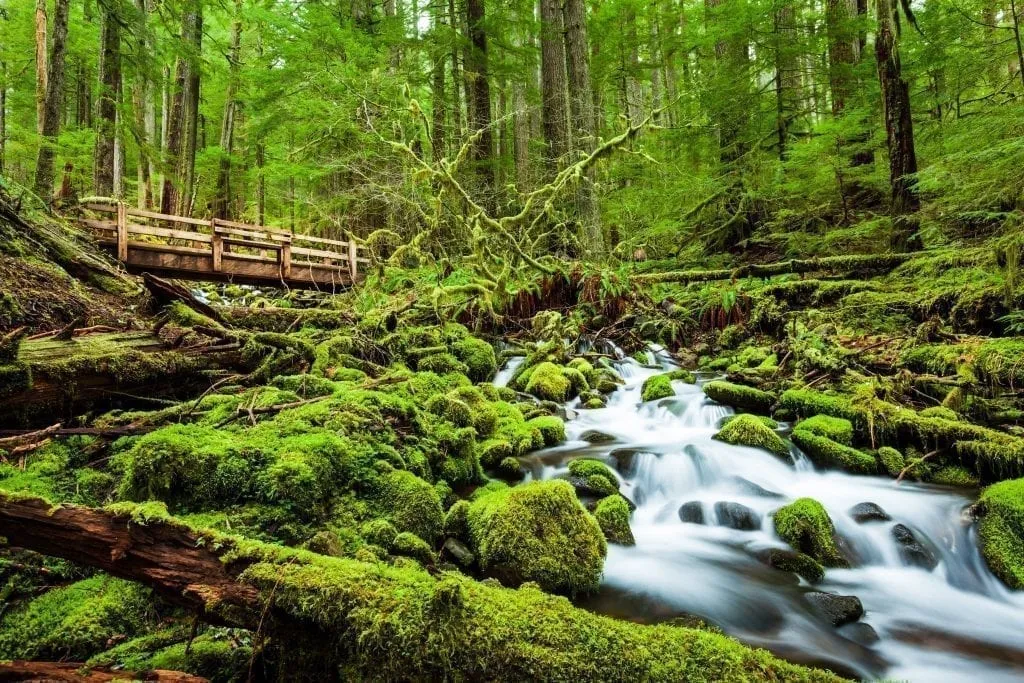
The park is large, and includes nearly 1 million acres of perfect Pacific Northwest wilderness and more than 70 miles of coastline to explore. Here you can view and explore old-growth rainforest, several ecosystems, rugged coast beaches, and snow-covered mountain peaks.
Nature lovers will be in heaven with so much natural beauty to experience. Some of the must-see spots include the magical Hoh Valley Rain Forest, the steamy Sol-Duc Hotsprings, crystal clear Lake Crescent, and cascading Marymere Falls, plus the wild Ruby, First, Second, and Third beaches.
For hikers, there’s an almost endless list of hiking trails in Olympic National Park. There are trails for all levels of experience, but some favorites are The Hall of Mosses, Hurricane Ridge, Klahhane Ridge, and Elk Mountain.
For a fully immersive Olympic Park experience, consider camping for a night or two. There are several campgrounds to choose from, but they are all quite basic. Most have pit toilets and no showers.
If you want to backpack one of the longer hiking trails, you can purchase a wilderness camping permit for overnight stays.
One of the more unique places to camp is right on the beach. Second Beach is perfect for this as long as you don’t mind the short hike in with your gear.
When to Visit
The Olympic Peninsula sees a lot of rainfall year-round, so although summer is generally the best time to see the sun, it’s still far from guaranteed to be dry.
Spring is a great time to enjoy roaring waterfalls and wildlife spottings.
Hiking is best from May through October, but unless you’re planning to hike at higher elevations, most trails are open year-round.
Pinnacles National Park, California
From Dhara of Roadtripping California
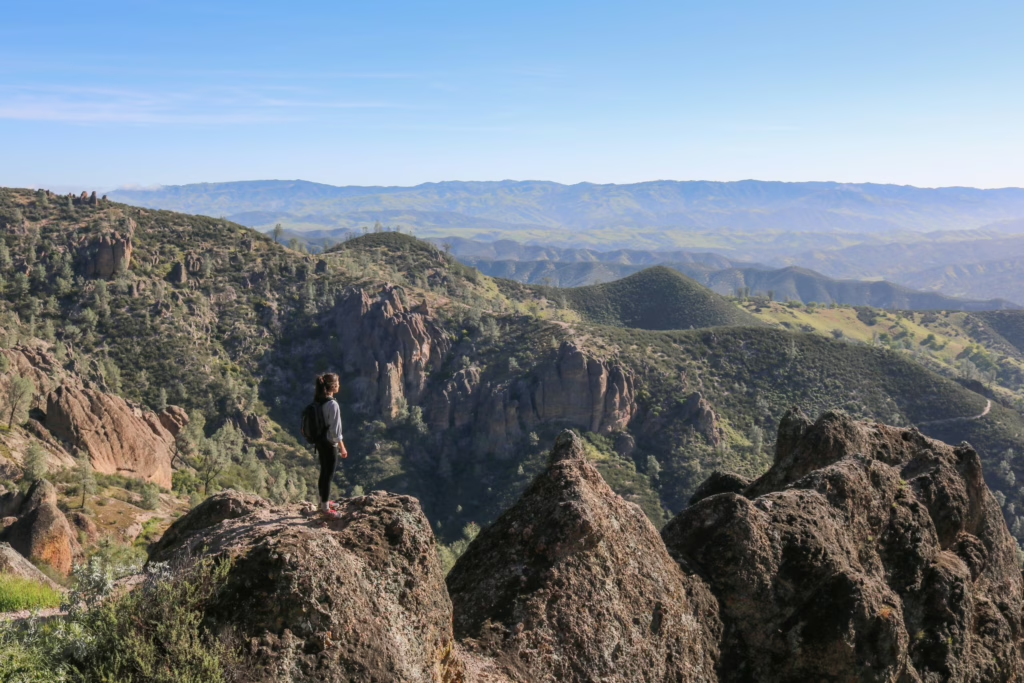
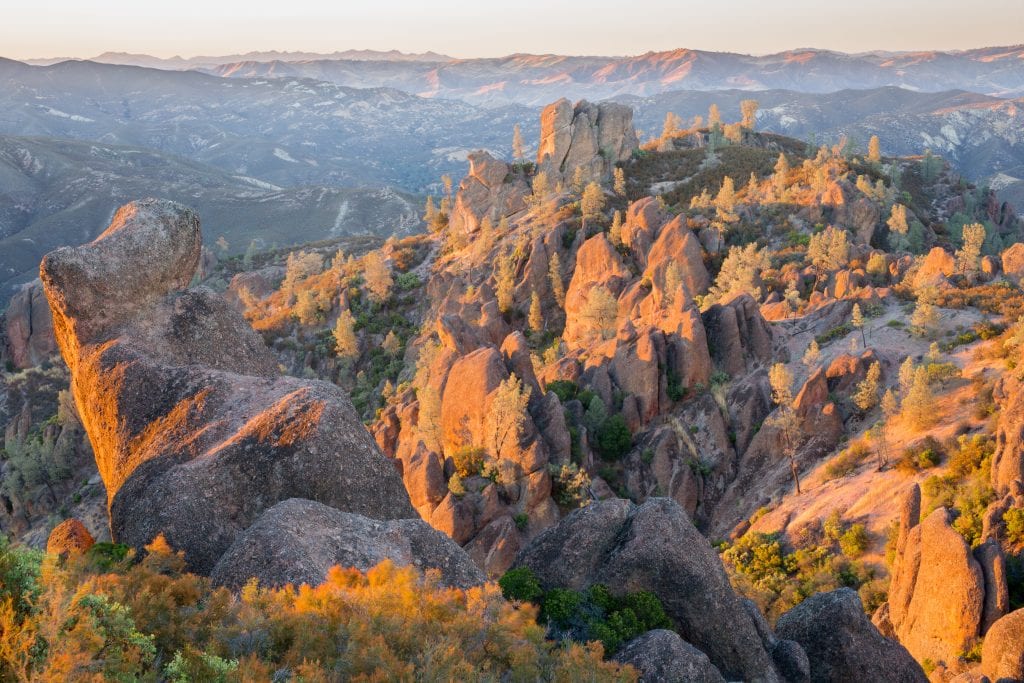
Pinnacles National Park is both California’s youngest national park and one of its lesser-visited parks, making it an exciting place to explore. Visitors that make their way to Pinnacles National Park are rewarded with an extraordinary wilderness experience.
Hiking is quite unequivocally the most popular reason to visit Pinnacles. There isn’t a road that runs through the park, so in order to explore it, you have to be able to hike.
If you are up for it, take one of the lower trails up to High Peaks Trail, where you can take in the views from the higher elevations of the pinnacles.
Here you can also look for roosting California condors! The park is one of the few places where you can see the endangered birds with their enormous wingspans.
Pinnacles is also known for its talus caves. There is a talus cave you can explore from each of the park’s two entrances.
Trails leading to the caves are relatively easy and family-friendly. On the eastern end of the park, you can go from Bear Gulch Cave to Bear Gulch Reservoir, a scenic place for a few minutes of relaxation.
When to Visit
The best time to visit Pinnacles is from late fall through early spring, when temperatures in the park are pleasant.
Summers in the park are very hot and best avoided.
Mount Rainier National Park, Washington
From Jarrod of Ramble Around the World
From its snow-capped peaks to its 14,410-foot active volcano that towers over 369 square miles of protected land, Mount Rainier National Park is one of the most uniquely diverse and splendid national parks in the country.
Home to some of the most incredible drives and hikes near Seattle, it can take the average person a few visits during different times of the year to see everything in its true beauty.
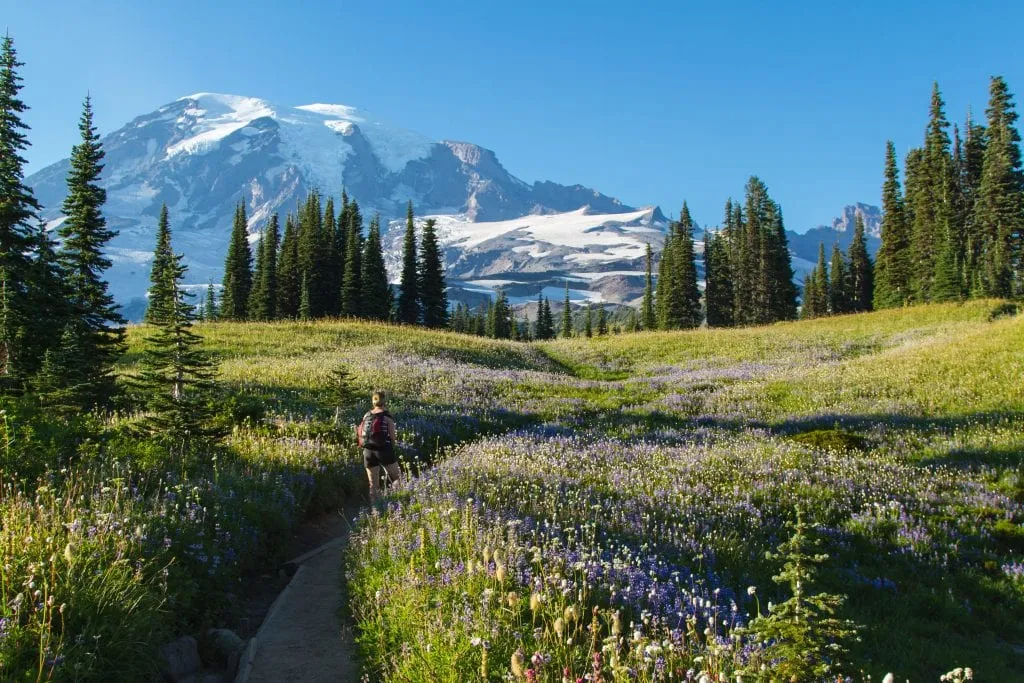
Mount Rainier National Park is known for its incredible reflecting lakes, like Tipsoo and Reflection Lakes, for its world-class hiking like at the Skyline Trail and Mount Fremont Lookout Trail, and its mountaineering.
Around 10,000 people each year brave the freezing temperatures and sweeping storms to take a crack at summiting Mount Rainier itself.
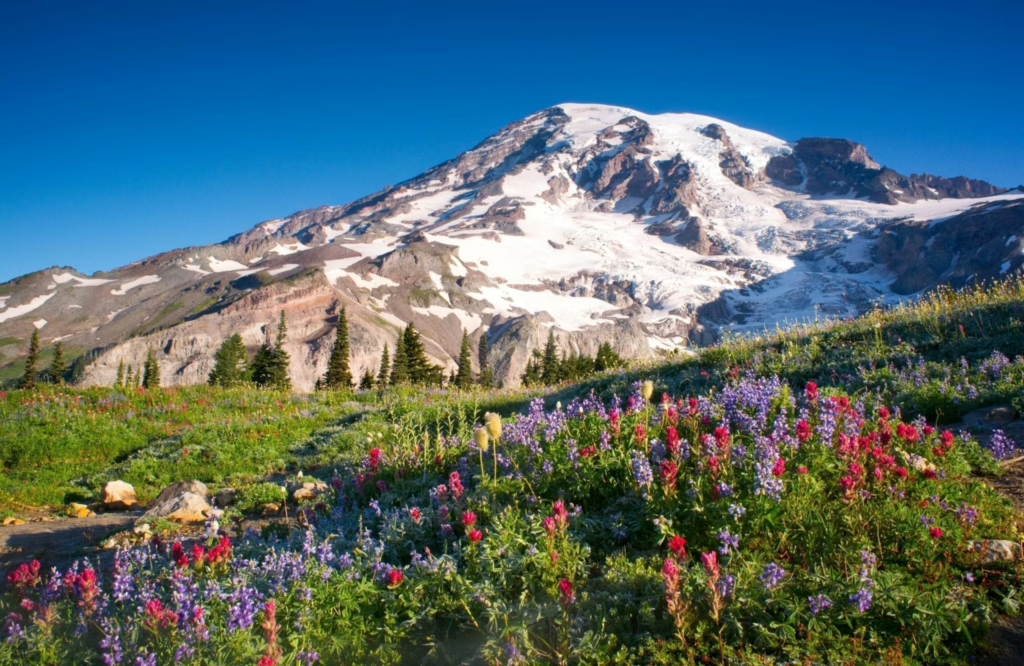
The park is also home to picturesque flora, including some of America’s most colorful wildflowers that bloom in late July and early August in the Paradise area of the park.
The reason for the late wildflowers is due to Mount Rainier National Park’s location, tucked inside many towering mountains and only a few hundred miles away from the Pacific Ocean.
When to Visit
Although snow blankets the park year-round, the best time to visit Mount Rainier is late in the summer. That’s when the roads are all open, waterfalls are spewing with freshly melted snow, and wildflowers are blooming.
Although you can visit the park during other parts of the year, you may be met with bitter cold and many feet of snow covering the park’s hiking trails.
Joshua Tree National Park, California
From Nadine of Le Long Weekend
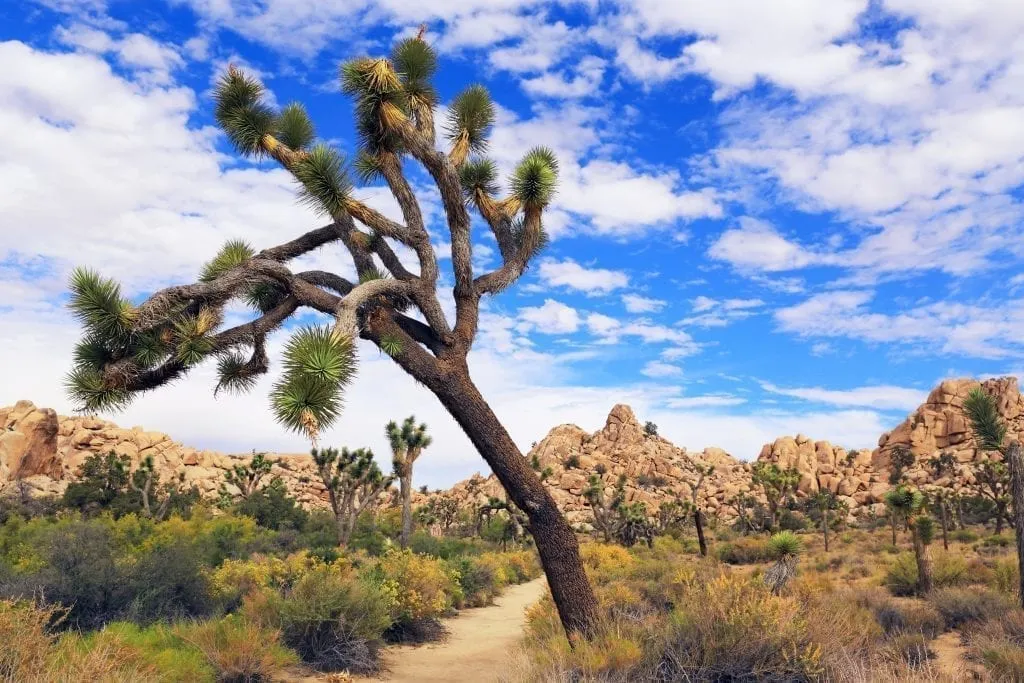
With an incredibly intriguing landscape, unique flora, and native wildlife, a trip to the Joshua Tree National Park is never dull. The park spans over both the Colorado and Mojave deserts, and yet the well-laid-out navigation means it’s easy to experience in a day.
However, if you do decide to stay longer, there are campgrounds to enjoy for the night.
There are many hikes to undertake within the park and it’s best to stop at the visitor centre to pick up a hiking map on your way in.
The hikes range in length and difficulty, and if you’re visiting Joshua Tree with kids, you’ll find plenty of child-friendly options.
Don’t miss the Hidden Valley Nature Trail for chipmunks and plenty of Joshua Trees, the Barker Dam Nature Trail for birdlife, and the Skull Rock Nature Trail from where you can take in the mighty Jumbo Rocks.
Visit the Keys View viewpoint for a beautiful view of the Coachella Valley and Mount San Jacinto in the distance.
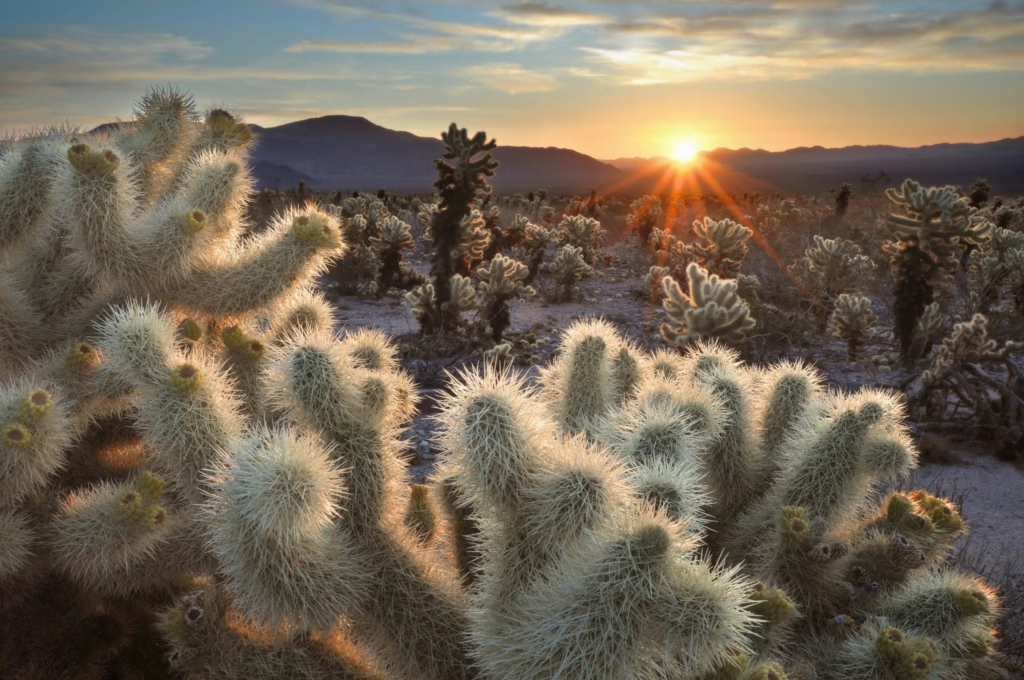
And be sure to stop by the Cholla Cactus Garden, where you’ll find the iconic “teddy bear cactus” to walk among: just be careful not to get too close!
When to Visit
The seasons of spring and fall are best for visiting Joshua Tree.
Both summer and winter can see extreme temperatures and unfavorable conditions for exploring.
At any time of the year, go prepared for temperature fluctuations and carry enough water, layers of clothing, and sun protection.
Crater Lake National Park, Oregon
From Kay of The Awkward Traveller
As the state’s only US national park, Crater Lake has big expectations to fill as an Oregon road trip destination!
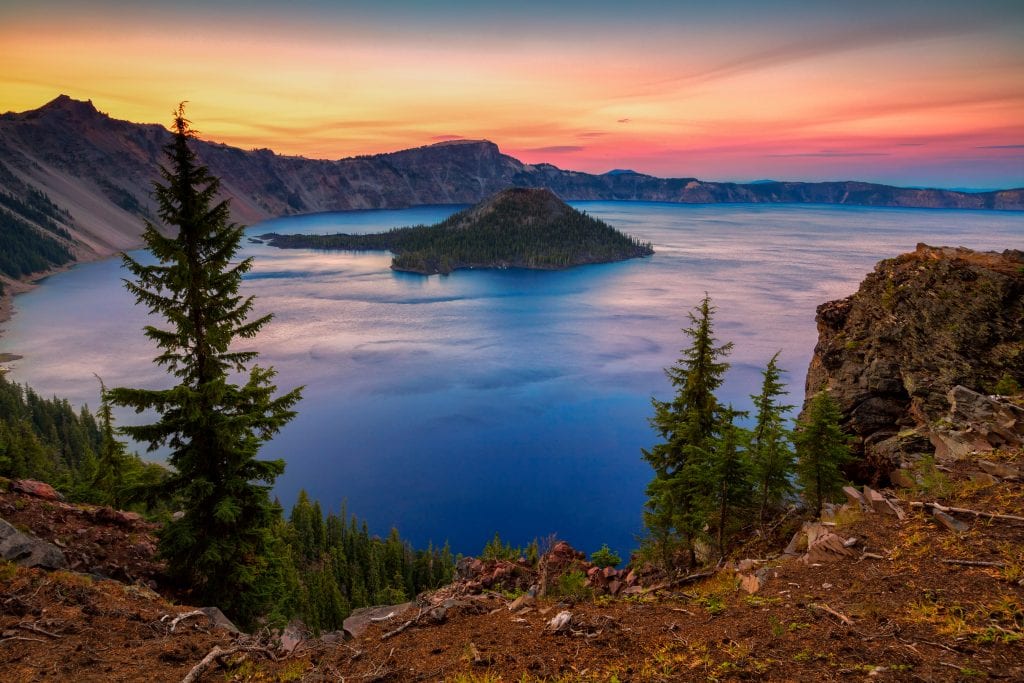
As the name suggests, Crater Lake National Park is quite literally a giant crater filled with water.
The lake was formed after the eruption of the ancient volcano Mt. Mazama, is sacred to the indigenous Makalak people, and it’s the second cleanest freshwater lake in the country (and also the deepest).
While you can’t kayak or boat in the lake, you can hike down to the water via the Cleetwood Cove Trail and jump in for a swim.
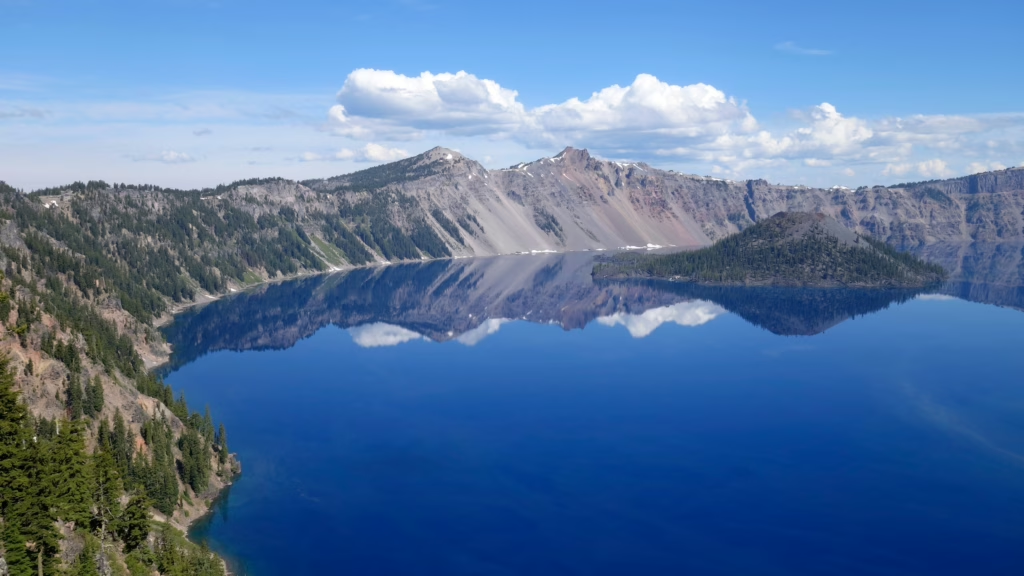
Other iconic spots include Watchman Overlook, the Pinnacles Trail, and Plaikni Falls. There are even wheelchair-friendly trails, such as the Sun Notch Trail, though you can enjoy 360-degree views of the lake straight from your car if you choose to drive.
Since Crater Lake NP is fairly small, there aren’t too many food options. Either stop by the Rim Village Cafe for a bite or bring your own snacks.
When to Visit
The best time to visit is either summer or early fall when you have full access to the park.
In the winter through spring, the entire rim is not open due to snow, and many hikes and trails are closed.
Sequoia National Park, California
From Jenny of Campsite Vibes
Stunning Sequoia National Park, nestled in central California, is an incredible national park in America and a gem that’s well worth a visit!
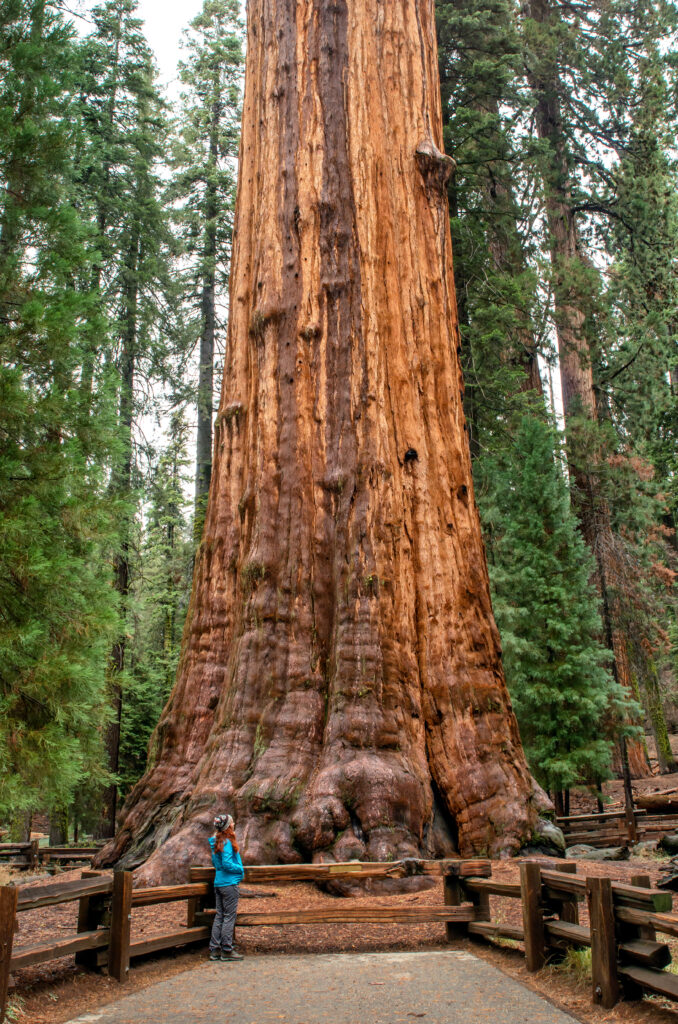
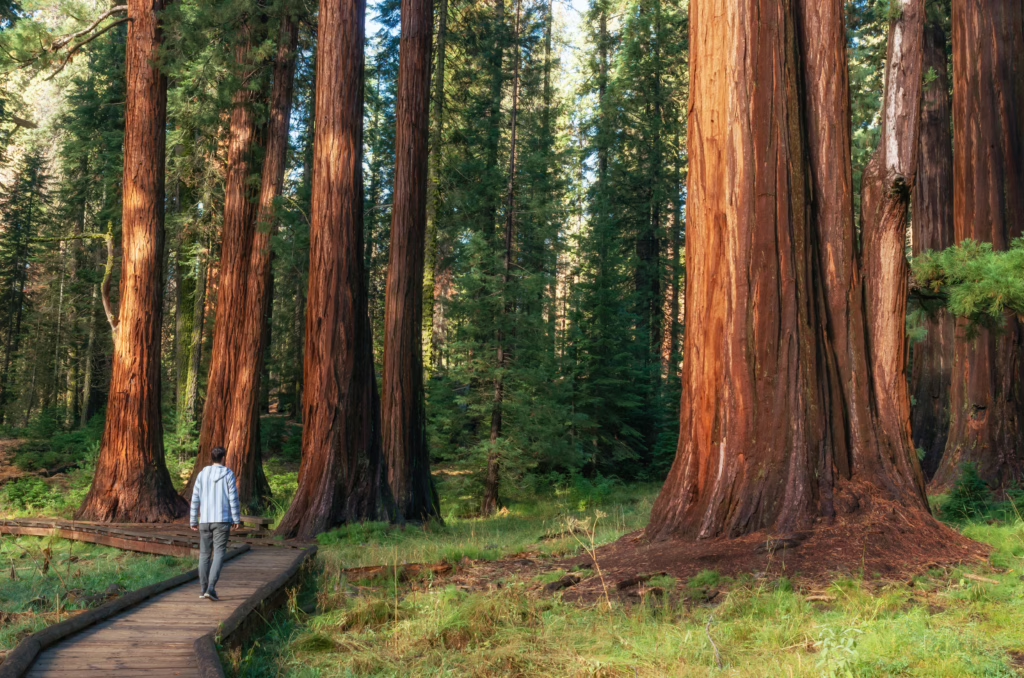
For starters, this is the only place to see sequoia trees, the widest tree in the world. They’re very similar to redwoods at first glance, but sequoias are wider and redwoods are taller.
Within the park, you can find a combination of forested trails, towering peaks, alpine lakes, meadows, and waterfalls. There are also trails for every difficulty level, from beginner day hikes to multi-day backpacking trips.
One of the best backpacking trips is the 72-mile High Sierra Trail, which starts from Cresent Meadows and ends on the highest point in the lower 48 states, Mt. Whitney. This trail goes through some of the most beautiful scenery in California.
If you can only do a section of this trail, spend 2-3 days hiking to Bearpaw Meadow. If you want to challenge yourself further, backpack to Lake Hamilton.
There are also a variety of day hikes! Moro Rock is a steep but beautiful trail with 360-degree views of the Great Western Divide. Do this one for sunset!
If you’re looking for more of a stroll through the forest, visit the General Sherman Tree in the Giant Forest. Tokopah Falls Trail and the Zumwalt Meadow Loop are also easy day hikes.
If you want to challenge yourself to longer day hikes, do the Jennie and Weaver Lakes Loop, the Alta Peak Trail, or the Big Baldy Trail.
Then spend some time relaxing by Hume Lake. Go kayaking, go stand up paddleboarding, read on the shore, or go for a swim!
When to Visit
Summer or winter is the best time to visit this park, and each season brings its unique experience.
Winter is a great time to see the park as a winter wonderland, and to go snowshoeing or cross-country skiing!
If you want to swim in the lakes, go hiking, camping, or backpacking, then visit this park in the summer.
Most Beautiful US National Parks in the East
Acadia National Park, Maine
From Elena of The Carry-On Chronicles
Acadia National Park is affectionately known as the “Crown Jewel of the North Atlantic Coast,” and it lives up to the nickname.
Located on Maine’s Mount Desert Island, Acadia is an outdoor adventurer’s playground. This popular park offers terrain for hikers and bikers of varying abilities, as well as spectacular scenery for photographers.
Whether biking or exploring on foot, there’s a vast network of carriage roads located throughout the park.
Park visitors can warm up with a family-friendly stroll along the Ocean Path and admire spectacular coastline views from Sand Beach to Otter Cliff.
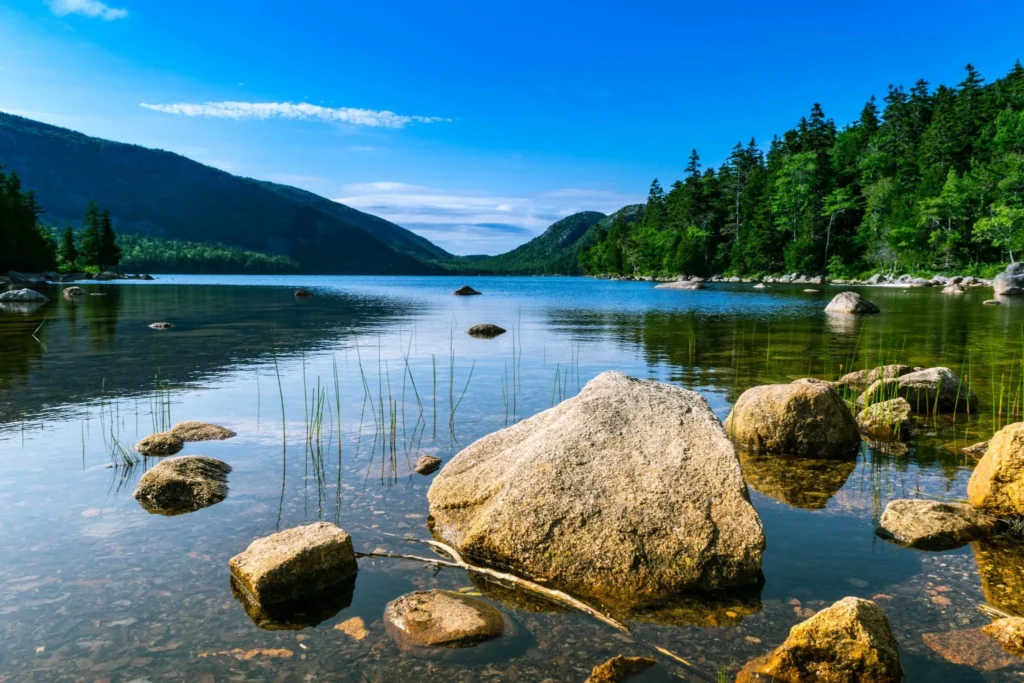
The Jordan Pond Loop offers another comfortable stroll, and features views of South Bubble Mountain and North Bubble Mountain. Here, hikers can’t miss a stop at the historic Jordan Pond House for some popovers and tea.
More advanced climbers may consider iron-rung-equipped trails, including The Beehive Trail, The Precipice Trail, The Jordan Cliffs Trail, and The Beech Cliff Trail.
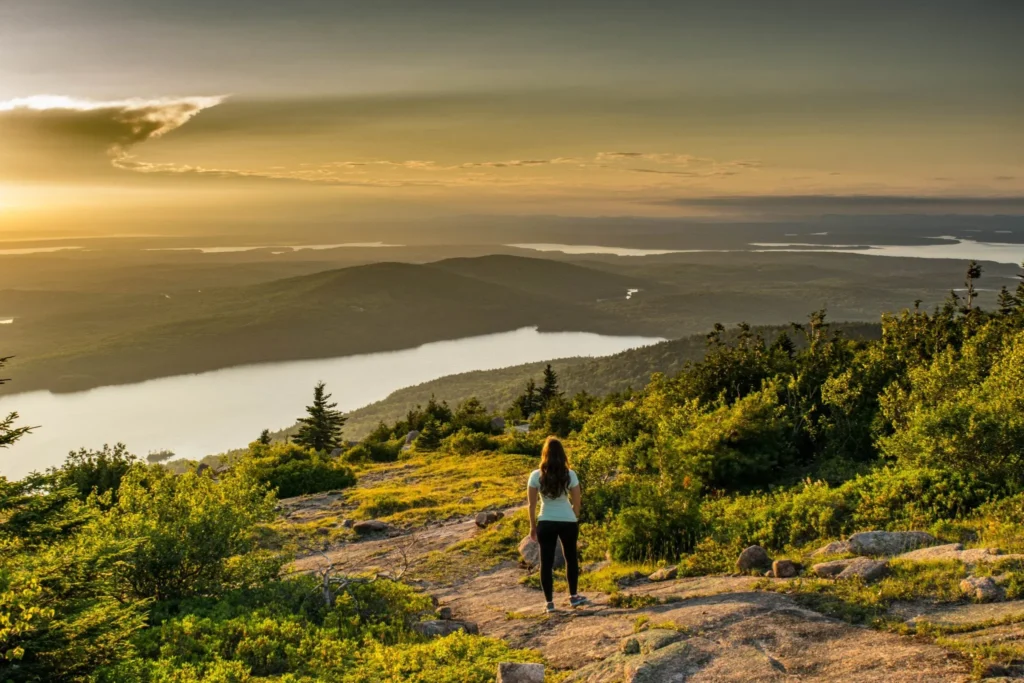
Regardless of ability, visitors cannot miss a hike (or a drive) up to Cadillac Mountain, the highest point along the Atlantic Seaboard, which features breathtaking views of the Porcupine Islands.
For part of the year, Cadillac Mountain is also where the sun rises for the first time over the United States each day!
When to Visit
While Acadia is beautiful year-round, it’s best between late spring and early fall, when the weather is moderate.
November through March is the least favorable time to visit, with cold temperatures and numerous attraction closures.
Everglades National Park, Florida
From Paula of Paula Pins the Planet
The Everglades National Park is not only a fascinating ecosystem and one of the most unique national parks in America, but it’s also a UNESCO World Heritage Site!
Located in the sunny state of Florida, just west of Miami and Fort Lauderdale, Everglades NP makes a great side trip for lovers of outdoor activities.
With lots of natural beauty, many hiking trails to choose from, and water activities like traditional airboat rides, there’s no other US national park quite like it.
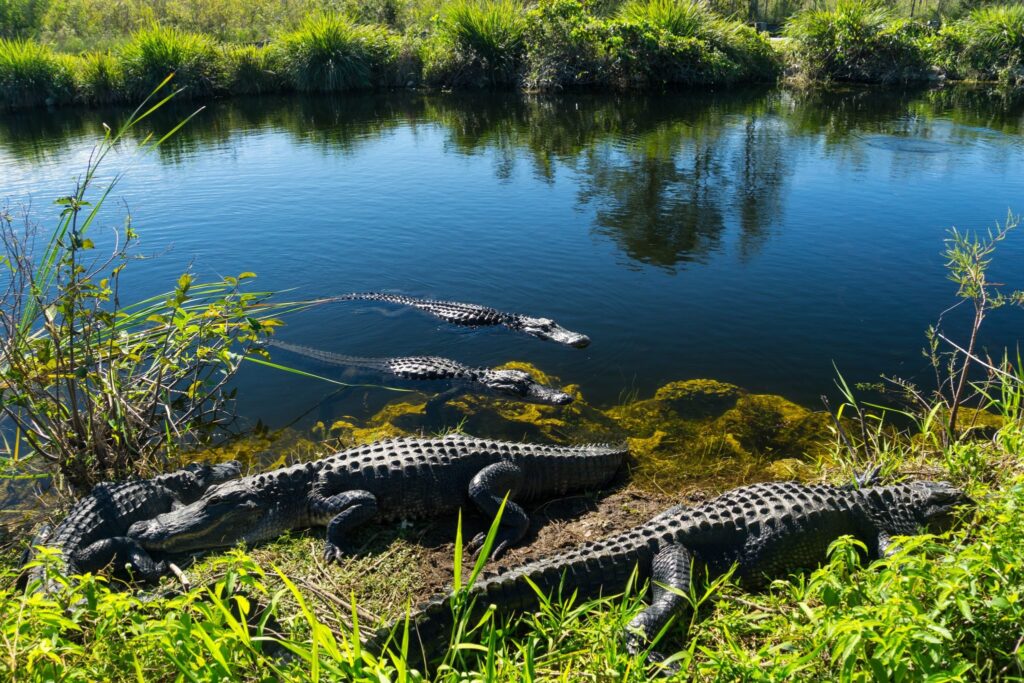
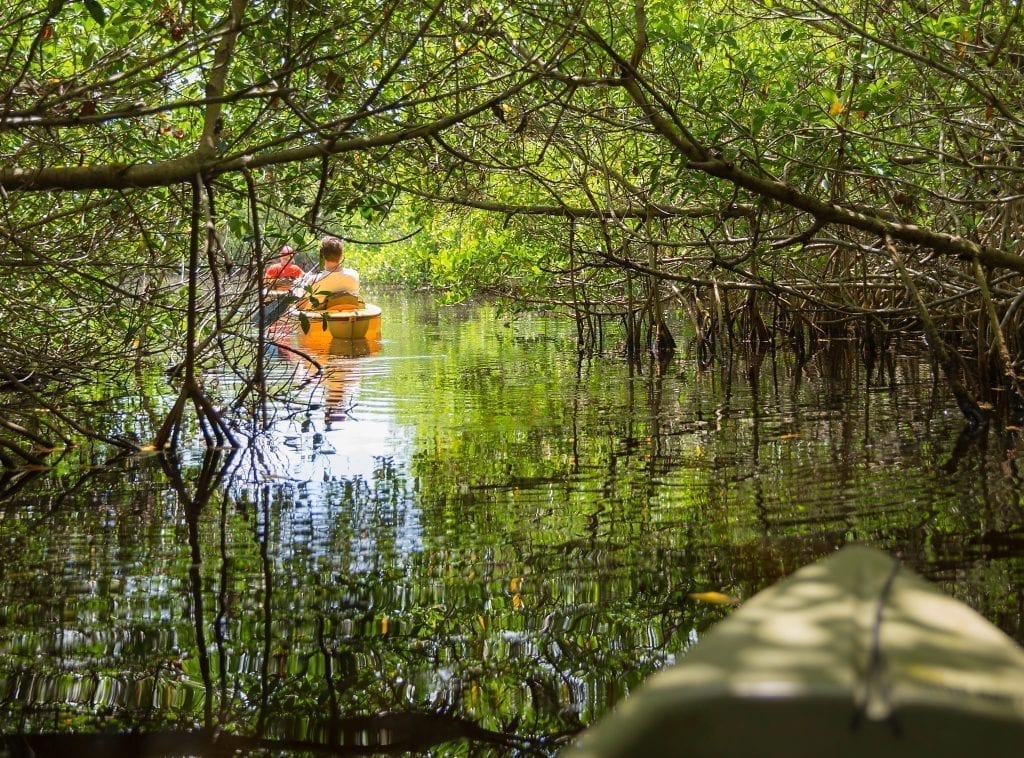
A must-visit spot during your trip to the Everglades is the Ten Thousand Islands Wildlife Refuge. It’s the second-largest mangrove forest in the world, and it forms fascinating labyrinths of water and islands with very rich wildlife, including some endangered species.
When to Visit
The best time to visit is between October and May when the weather is cooler and drier. The temperature and the humidity levels are lower, the mosquitoes are not around, and hurricane season has passed.
During this time, the average temperature ranging between max 78.4°F (25.8°C) and min 59.7°F (15.4°C). It is also the best time to see the local wildlife.
This is the time that manatees migrate to the Everglades, also when the water levels drop during the dry season and a large number of animals congregate around the water holes, making wildlife viewing an easy endeavor.
If you visit during the summertime, between June and September, book your hikes and outdoor adventures for the morning, to avoid the hottest parts of the day and the frequent summer storms in the afternoon.
Shenandoah National Park, Virginia
From Cosette of KarsTravels
Shenandoah National Park is a beautiful US national park that covers part of the Blue Ridge Mountains.
Visit for the views from the Skyline Drive, the waterfalls, the hiking, and for a chance to see black bears in their natural habitat.
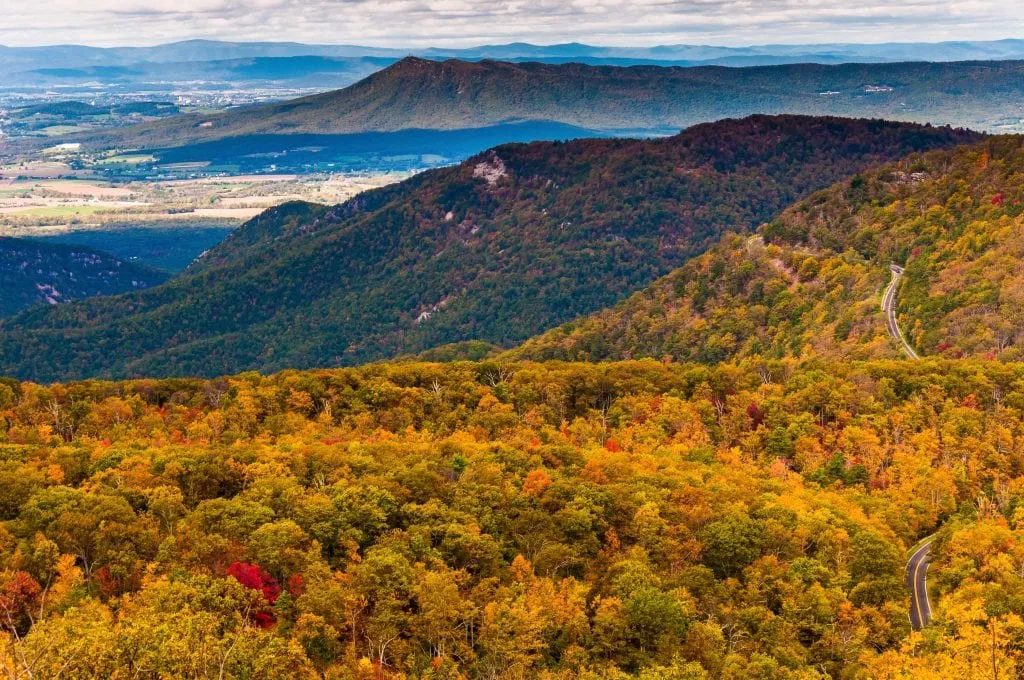
One of the top things to do in Shenandoah is to drive the 105-mile long Skyline Drive. It crosses the park from North to South and has many overlooks. Next to this drive, there are over 500 miles of hiking trails.
The most popular hike is to Old Rag Mountain, a 9.4-mile circuit hike that takes about 8 hours. Although physically demanding, the adventurous rock climbing (scrambles) and views all around on the Blue Ridge Mountains make it worth it.
There are numerous smaller and less strenuous hikes available. The 20 hikes towards waterfalls are popular.
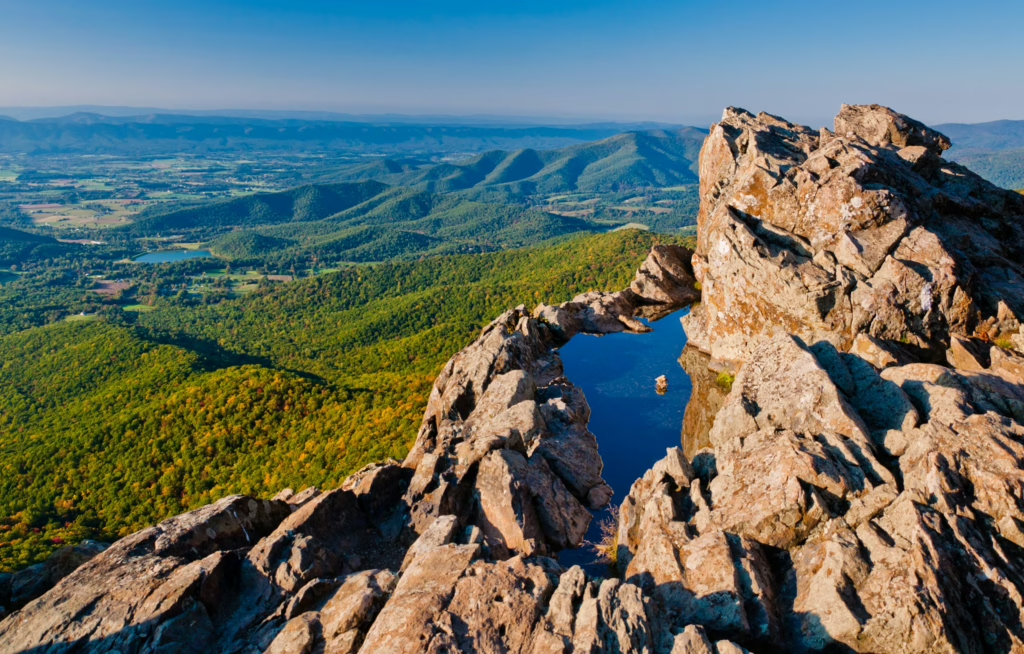
Perfect with kids is the Stony Man Nature Trail, which leads to the Stony Man’s Summit, the highest point in the park.
When to Visit
The best time of year to visit is October, for the fall foliage. It’s also the busiest time of year.
In winter, snow can provide beautiful views, and in spring wildflowers and trees are in full bloom.
Summer can bring hot and humid weather, along with crowds, though the long days can make it worth the trade off.
The Top National Parks in the Southwest
Bryce Canyon National Park, Utah
From Chris of The Aquarius Traveller
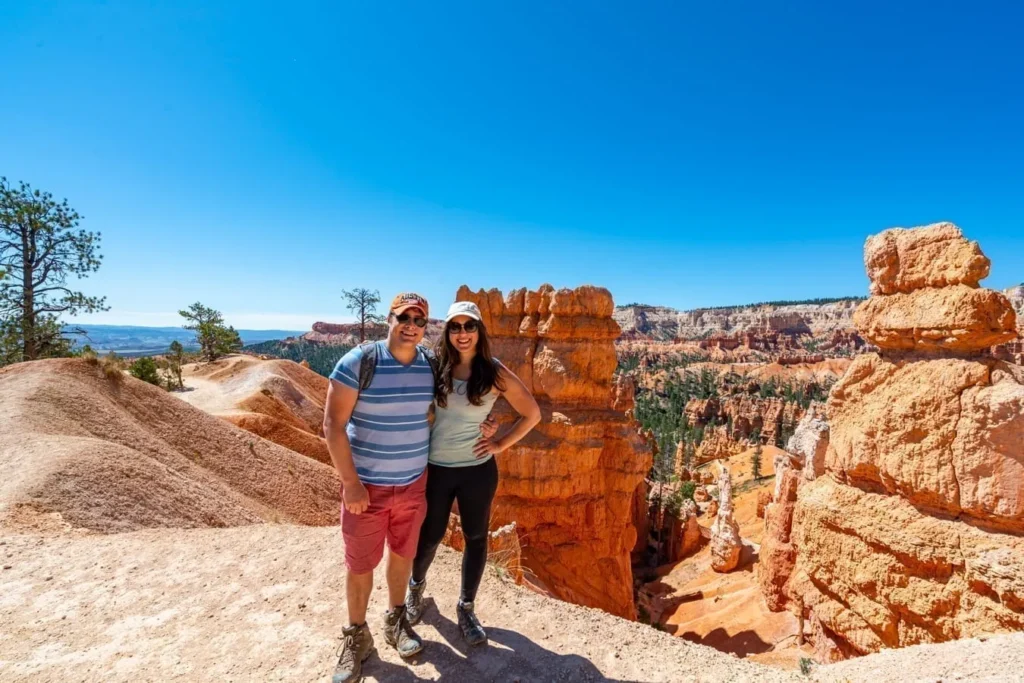
Viewing Bryce Canyon for the first time is an awe-inspiring experience that makes you feel like you have landed on another planet. It’s located on a higher elevation in Utah, not far from the more famous Zion National Park.
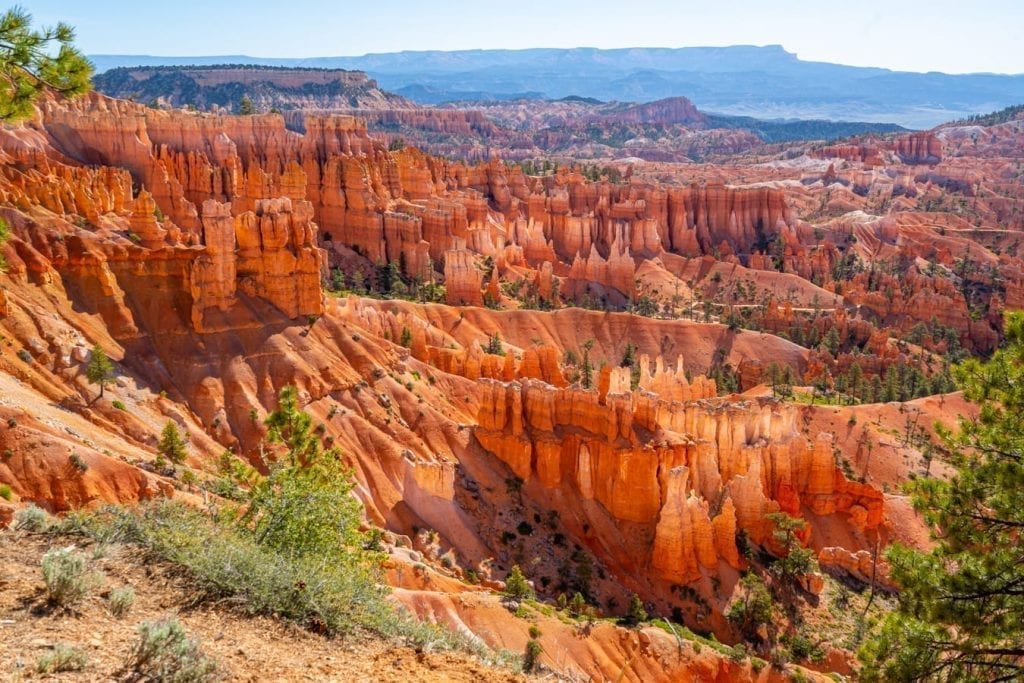
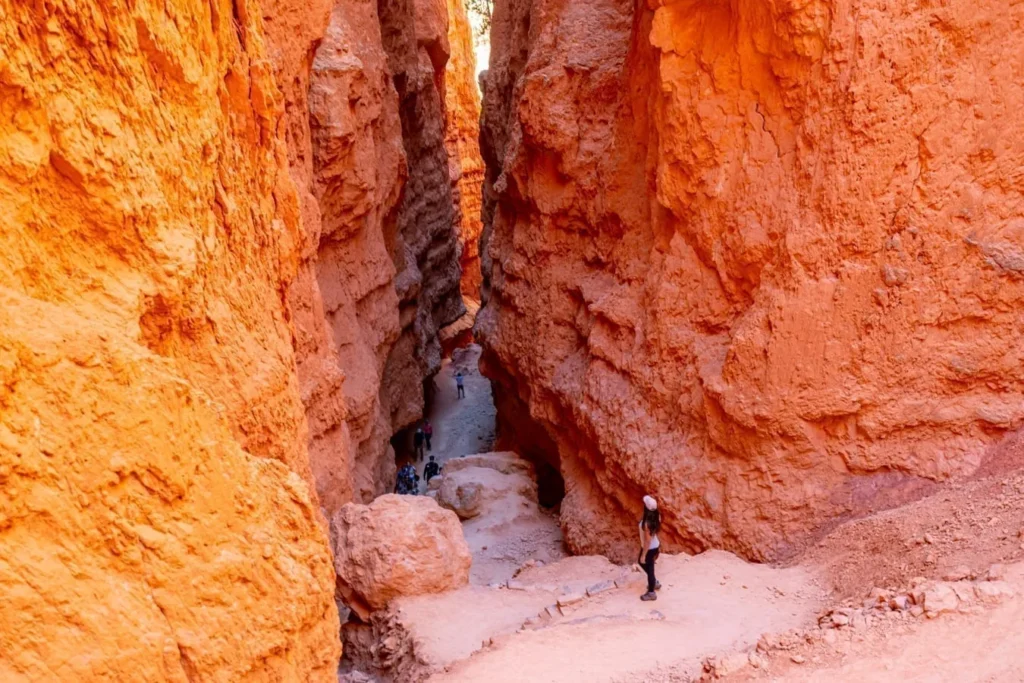
The canyon’s distinct, irregular columns of rock, known as hoodoos, are formed from frost weathering and stream erosion. Visiting Bryce Canyon gives you a chance to see the largest concentration of these hoodoos in the world!
There are 4 main viewpoints in the park that can be accessed without significant hiking: Bryce Point, Inspiration Point, Sunrise Point, and Sunset Point. They’re all worth a visit.
A shuttle service is offered between April and October to help get you around between the viewpoints.
There are a number of day hikes through Bryce Canyon that can vary from 1 mile to 23 miles, so you will be sure to choose one suited to your situation and time frame.
Some of the more popular trails are the Queen’s Garden trail and the Navajo Loop trail (especially the Wall Street section).
When to Visit
April to October tends to be the busiest season in Bryce Canyon NP, with average temps ranging from 75 to 98 degrees F, but if you’re after some snow-topped views then you can’t go past a winter visit in January or February.
Either way, you’re sure to enjoy this very unique area of the world, but be sure to catch a sunrise. You won’t be disappointed!
White Sands National Park, New Mexico
From Jeanine of Le Wild Explorer
White Sands National Park is one of the most beautiful places in the state of New Mexico.
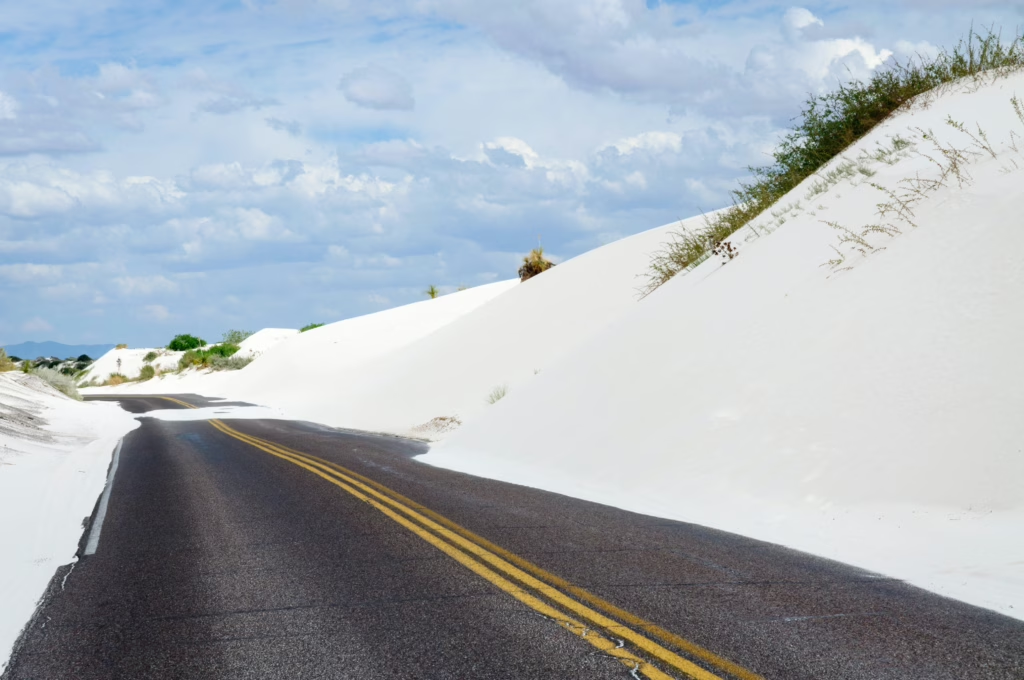
Located only about an hour outside Las Cruces, you’ll find the largest gypsum dune field in the world here!
While White Sands is a newer national park, it has been around for 250 million years or so. It was covered by a shallow sea back then!
This unique landscape is a must-visit US national park and will leave you feeling like you’re in heaven as you step onto the sparkling white sand.
There are many things to do in White Sands National Park, and watching the sunset is not to be missed.
For the adventure seekers, opt to go sand sledding. It’s a fun activity that can be enjoyed by both kids and adults and is so much fun.

If you love to gaze at the stars, stay the night with a backcountry camping excursion.
And for those who are looking to just take in the beauty, a scenic drive is a wonderful experience.
White Sands National Park can be enjoyed by just about everyone, it’s a stunning national park with lots of charm.
When to Visit
You can enjoy incredible views at White Sands National Park year-round, but to have the best experience at this incredible USA national park, consider avoiding the summer months when the heat can be extreme.
Canyonlands National Park, Utah
From Hannah of That Adventurer Blog
Thanks to its location just outside of Moab in southeastern Utah, Canyonlands National Park is is sometimes overshadowed by its famous neighbor, Arches National Park. However, it’s one of the best of Utah’s Mighty 5!
While you could easily spend days exploring Canyonlands, if you’re short on time you can even visit both Canyonlands and Arches National Parks in one day!
Canyonlands is enormous (337,598 acres), and is divided into 4 different districts, but most people visit The Island in the Sky district as it’s the easiest to get to.
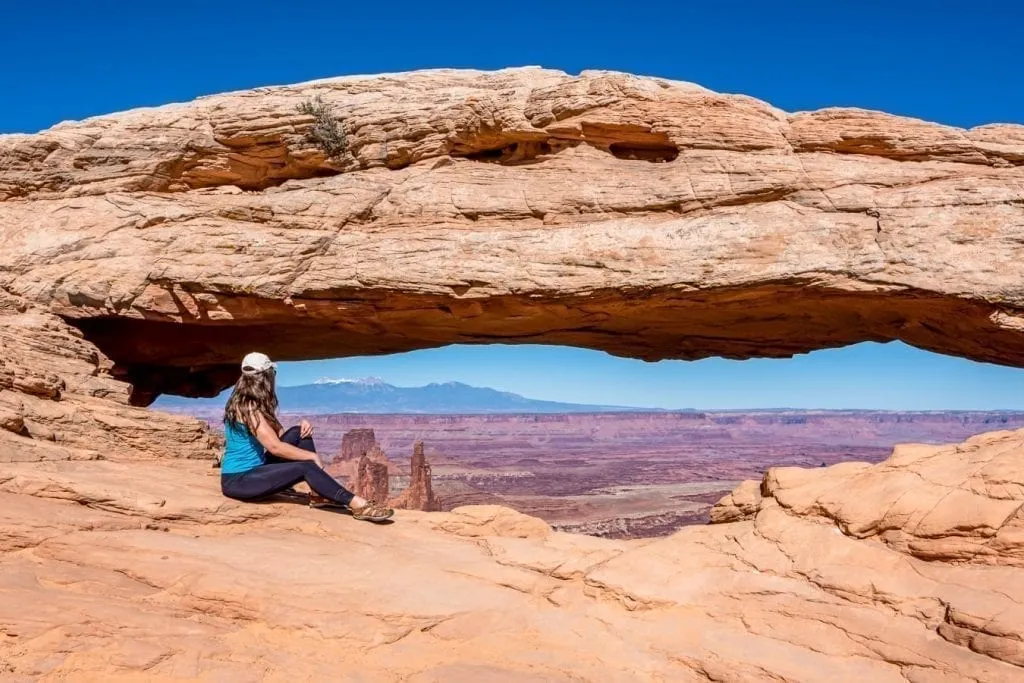
Some of the most popular things to see in this part of Canyonlands National Park are Mesa Arch, Grand View Point Overlook, and Green River Overlook. Each involves a short, easy walk from the parking lot where you’ll come out to an impressive viewpoint out onto the canyon down below.
Mesa Arch is perhaps the most famous and makes a great photo opportunity. It’s where the rock has eroded in such a way that an arch has formed and through this arch, you can see the canyon.
Green River Overlook offers incredible views of the Green River (you’ll see where it gets its name from!).
The Green River joins up with the Colorado River at Confluence Overlook and it’s the Colorado River that then goes onto the Grand Canyon and is responsible for creating that landscape!
When to Visit
The best times to visit Canyonlands National Park are in April/May and September/October when it’s not too hot or too cold.
Canyonlands is in the desert and can both see snow over winter and can get uncomfortably hot in the summer.

Death Valley National Park, California
From Carol of California Crossings
Death Valley is named as such because of the doomed efforts of pioneers who were desperately seeking passage through the southern Sierra Nevada mountains. In other words, it’s a hot dry, unforgiving landscape.
However, what initially looks like a vast, beige desert rewards the visitor who takes a closer look. Its solid, uncompromising geology is exactly what makes Death Valley such a great US National Park.
At 5,200 square miles, it’s the largest National Park in the continental US, but many of the top sites are concentrated in the middle of the park. With a well-planned itinerary, you can see most of them in a couple of days.
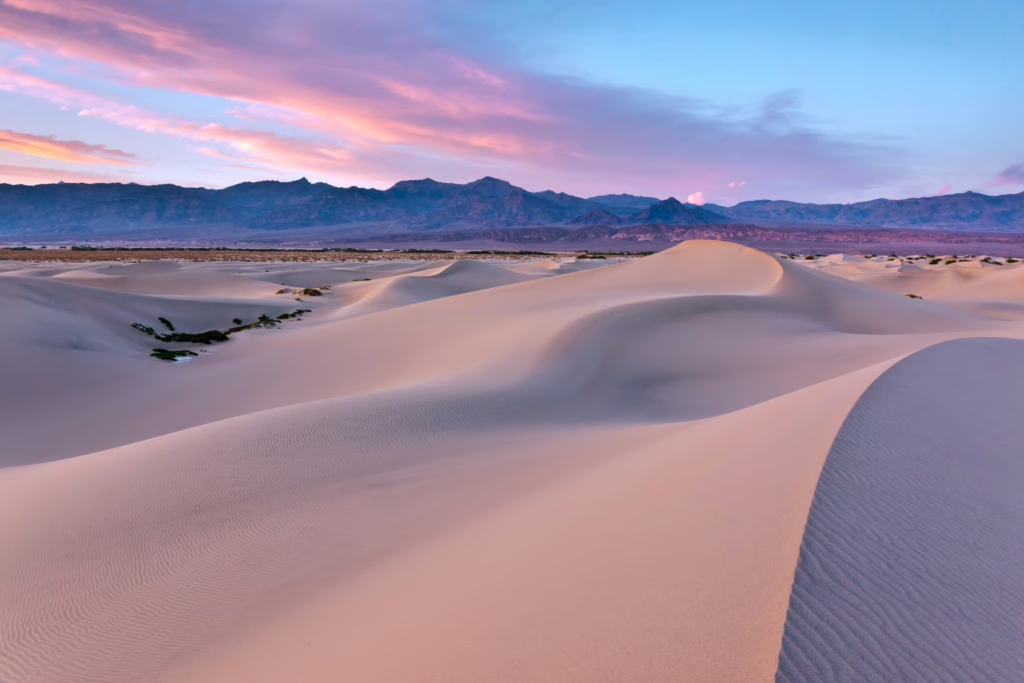
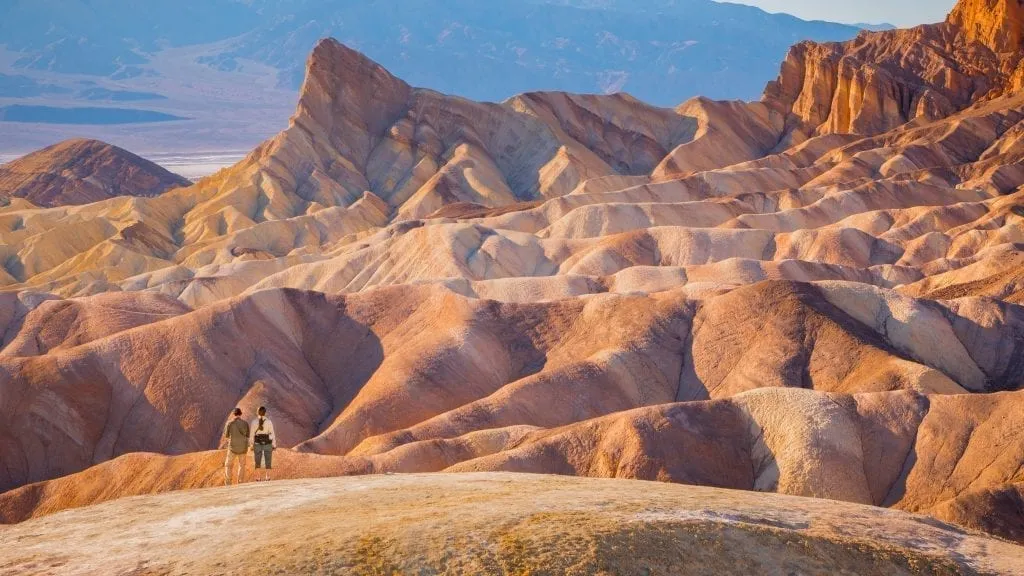
Top spots for sunrise include the Mesquite Dunes and Zabriskie Point. Mesquite Dunes are great for morning light and shadow.
Zabriskie Point has amazing views, textured hills and the rising sun lights up the Panamint mountains in the distance.
On the other hand, the top spot for sunset is Badwater Basin. It’s a large salt flat and the lowest spot in the US.
For crazy geology, head to the Artist Palette drive. In this canyon, the normally beige rocks give way to a rainbow of green, pink, and white.
The best place to learn about local mining history is the Rhyolite Ghost Town. Rhyolite is a great example of the boom and bust of California’s mining history.
Death Valley is a busy park so reserve your hotel or camp spots well in advance!
When to Visit
Unlike most of the best national parks in the USA, which see their peak visitors in summer months, never visit Death Valley in the summer.
The park lives up to its name, and in the summer, the 112-degree heat makes it too hot to visit safely.
Instead, plan your visit for the winter months.
Big Bend National Park, Texas
From Michelle of The Wandering Queen
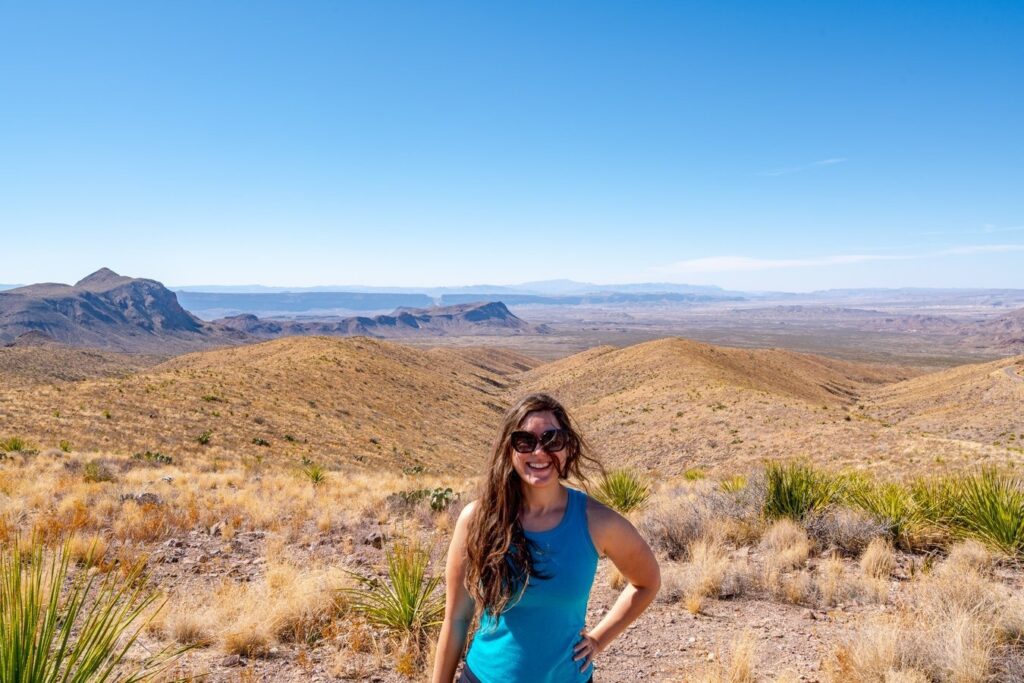
One of the best national parks to visit in the USA is Big Bend National Park, located in West Texas.
It is a hugely underrated park with small crowds, located at the border of Texas and Mexico. Hiking here belongs on any Texas bucket list.
There are many hiking trails, kayaking opportunities, lovely hot springs, and of course, the best Mexican food!
Some of the best activities at Big Bend include hiking popular trails such as The Lost Mine Trail, Window View Trail, Grapevine Trail, Boquillas Canyon Trail, Santa Elena Canyon Trail, South Rim Trail, and Emory Peak.
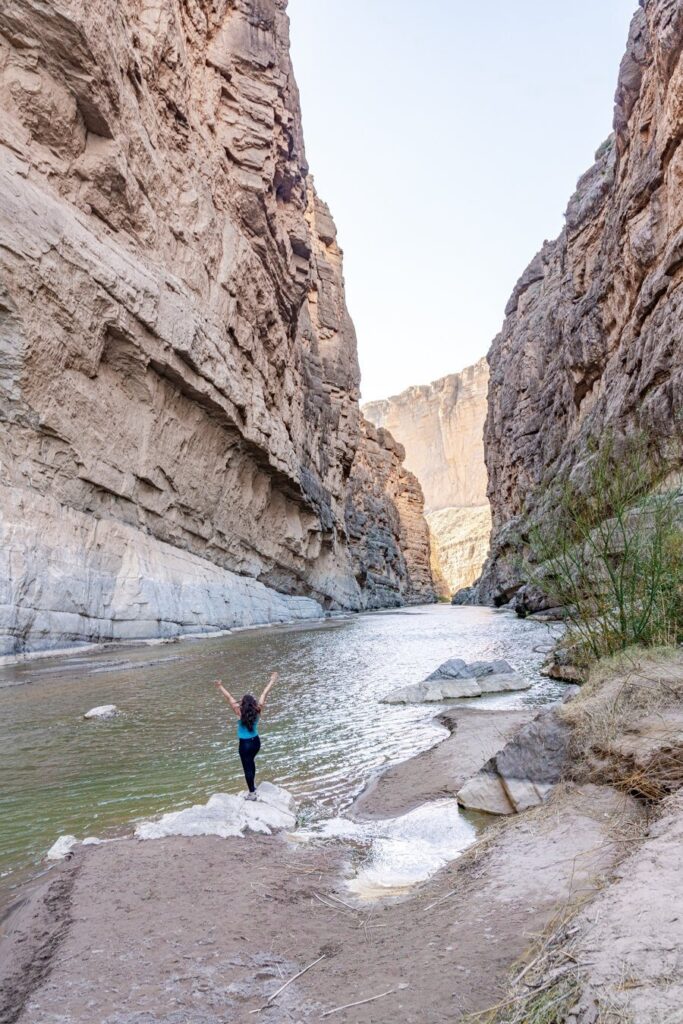
The Lost Mine Trail is fantastic for sunset, while the Boquillas Canyon trail is beautiful in the early morning. You can see the steam from the hot springs nearby on a chilly early morning.
Another very popular activity is to experience the Hot Springs trail. It is recommended to go for sunrise to avoid the heat and the crowds. Big Bend National Park can still get pretty hot in the winter!
Don’t miss nearby destinations like Terlingua Ghost Town or Big Bend Ranch State Park, either (though keep in mind that “nearby” in West Texas terms can still mean quite a bit of driving).
When to Visit
The best time to visit Big Bend is in the winter.
Summer can be too hot for enjoying the outdoors, and sometimes, they’ll even close the visitors center in response to the heat.
More of the Best National Parks in America
Yellowstone National Park, Wyoming
From Megan of Bobo & Chichi
While exploring the best US national parks, you don’t want to miss the very first national park in the world, Yellowstone. Located in Wyoming at the border with part of the park edging into the state of Montana, Yellowstone is easily one of the most unique corners of the United States.
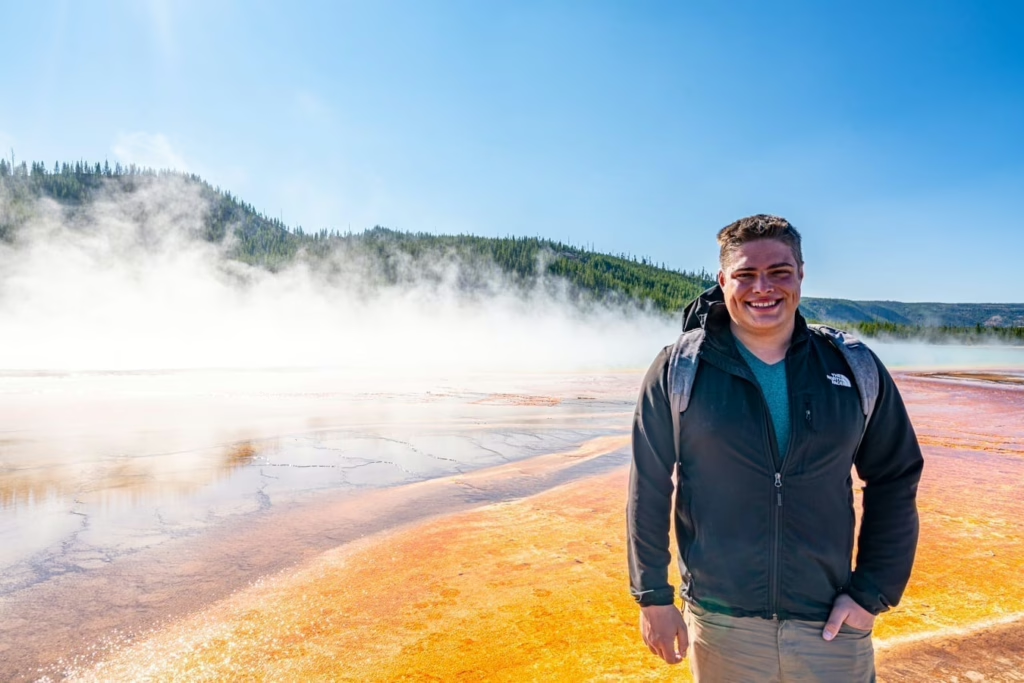
Yellowstone National Park is full of surreal otherworldly landscapes and is famous for its wildlife and geothermal activity including geysers and prismatic spring pools.
There are 5 different entrances or access points into Yellowstone National Park for beginning your exploring, and they’re not necessarily very close together!
Whether you have one day or a week to spend here, there are plenty of amazing things to see in Yellowstone that you don’t want to miss.
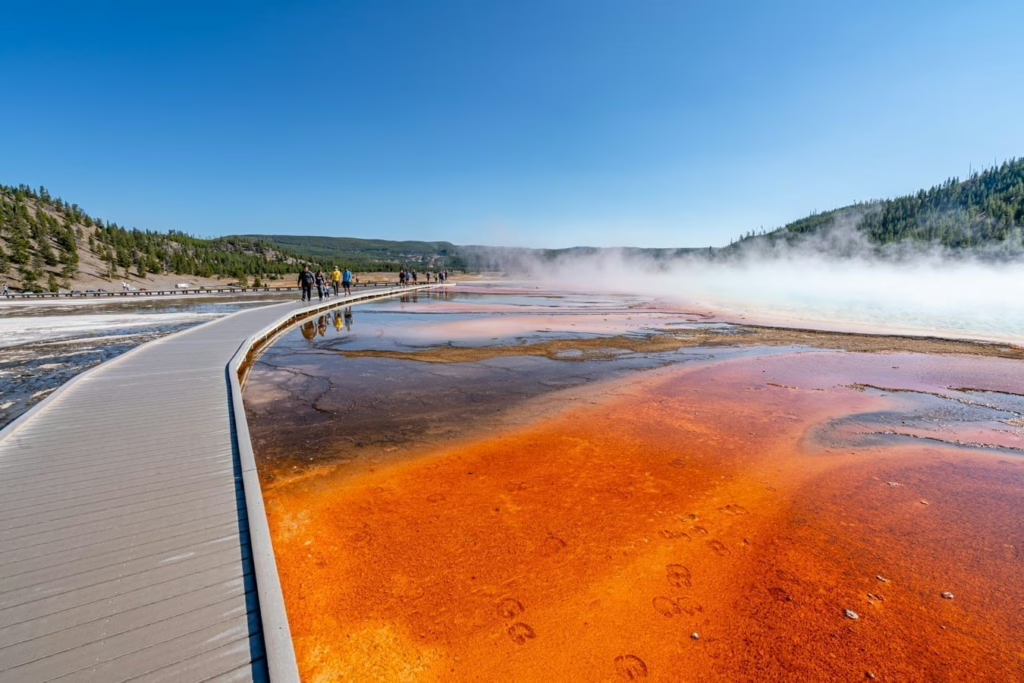
Some of the main attractions in the park including the layered thermal terraces at Mammoth Hot Springs, the world’s tallest geyser and a series of other hot geysers at the Norris Geyser Basin, the psychedelic colors at the Grand Prismatic Spring, wildlife spotting at Elk Park, Hayden Valley, and Lamar Valley, as well as the most famous of all the geysers, Old Faithful which spews hot water 100-180 feet in the air around every 90 minutes.
You can stay and explore Yellowstone from accommodation options within the park, for example, there are a few options by Old Faithful, or you can find plenty of lodging outside the perimeter of the park at each of its entrances.
When to Visit
While summer is the most popular time to visit Yellowstone, if you can swing a visit in the late spring or early fall, you’ll have an even better experience.
Intense crowds (both human and bison) can cause enormous traffic jams in the summer, and in the winter, most parts of Yellowstone are closed to private vehicle traffic.

Glacier National Park, Montana
From Julia of Well Planned Journey
Glacier National Park is easily one of the best national parks in America, and it should be at the top of your bucket list. From scenic drives to hiking trails, there is something for everyone.
To explore the best hikes and drives, give yourself at least 3 days in Glacier to get a solid overview of the park.
One of America’s most popular scenic drives, Going-to-the-Sun Road, runs through the heart of the park.
Going-to-the-Sun Road is an essential part of any trip to Glacier National Park. Dedicate a full day to exploring the vantage points and hikes along this scenic drive.
Be sure to stop at Lake McDonald Lodge, St. Mary Falls, and Hidden Lake Overlook. Going-to-the-Sun Road also has plenty of pull-offs and viewpoints to photograph the stunning landscape.
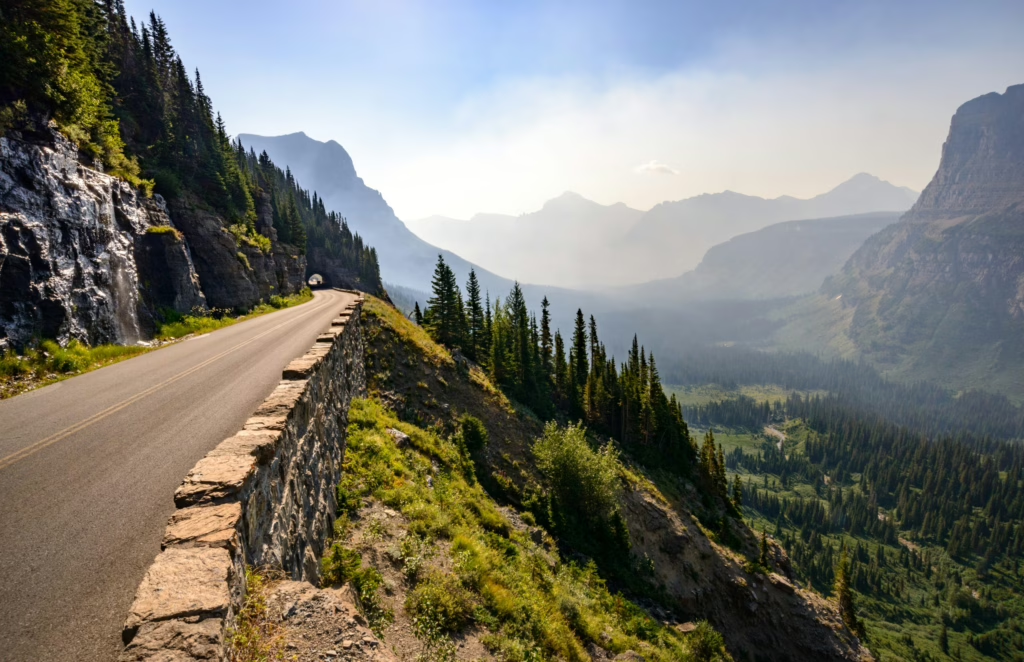
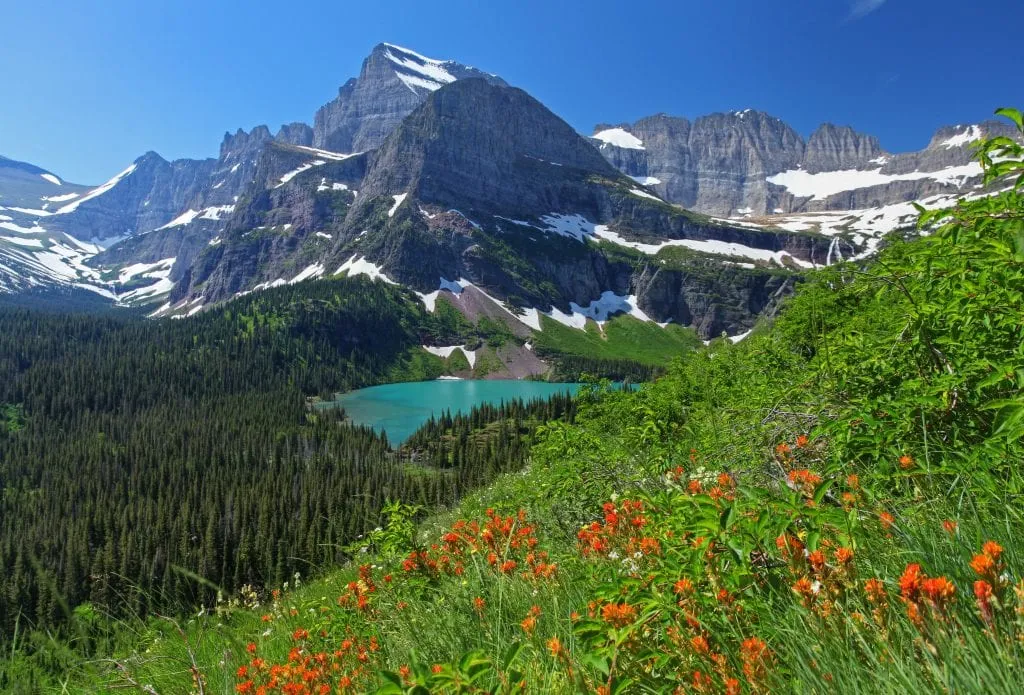
While Going-to-the-Sun Road provides plenty of great views, the best way to explore Glacier is on a hike. Some of the park’s most scenic and popular trails are the Highline Trail, Grinnell Glacier, and Iceberg Lake.
Hiking in Glacier also gives you the opportunity to spot its active wildlife, like bears and moose.
When to Visit
Going-to-the-Sun Road is closed and much of the park is inaccessible from October to May due to heavy snow.
The best time to visit Glacier National Park is from July to September, but expect heavy crowds due to the short tourism season.
Hot Springs National Park, Arkansas
From Victoria of Tori-Leigh
While Hot Springs National Park in Arkansas is one of the smallest national parks in the US, it is by no means less impressive.
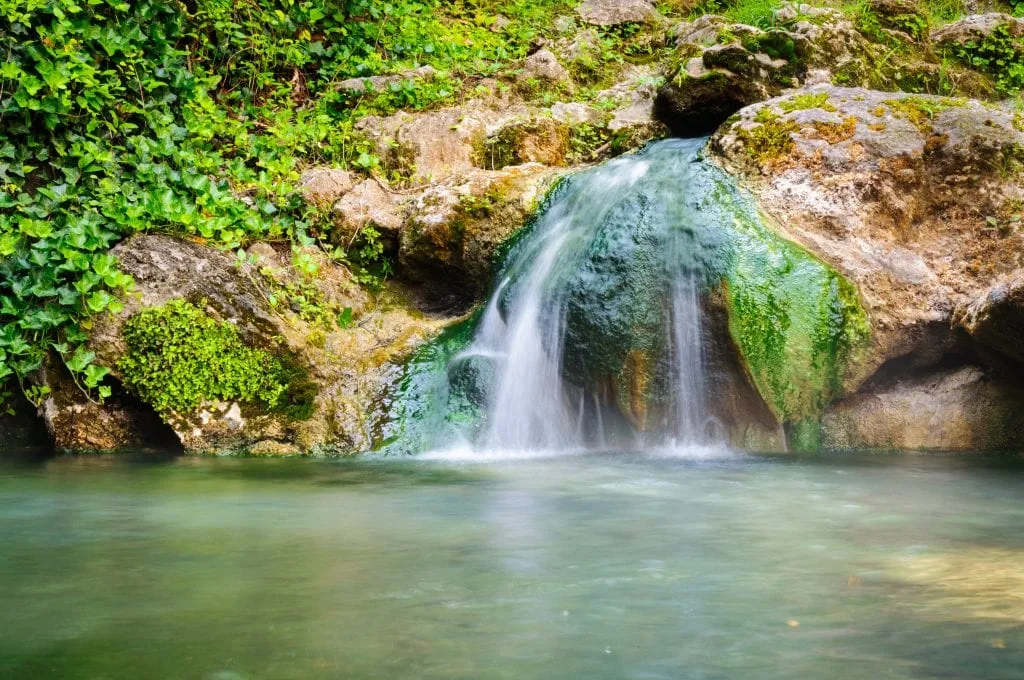
Ancient thermal hot springs, along with gorgeous mountain hikes with picturesque vistas, sit right in the middle of a historic town, creating a unique and memorable experience.
Numerous easy trails, along with a paved promenade and drivable viewpoints, make Hot Springs National Park one of the best US destinations for kids, seniors, and less seasoned travelers.
There are 26 miles of hiking trails, many easy, within the park’s borders. Along with the Grand Promenade, the trails provide quick access to the park’s natural hot springs.
More difficult trails, including the Sunset Trail, are less traversed and provide more opportunity for unique wildlife sighting.
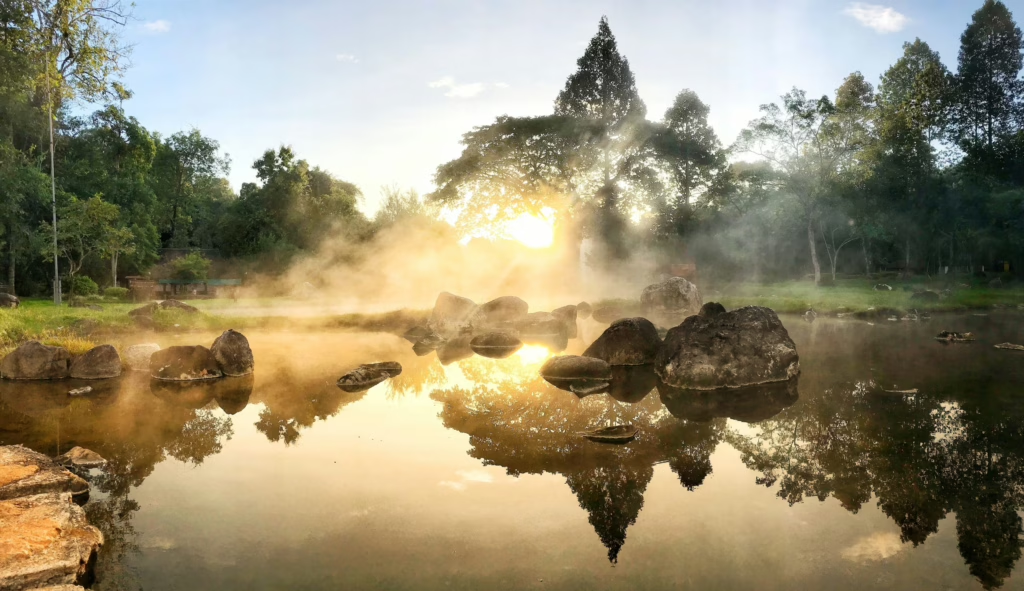
Visitors looking to skip the physical hike can drive up the mountain and take in the Arkansas mountain views at the 1920s observation gazebo and the Hot Spring Mountain Tower.
Sitting next to the park are the nine historic Bathhouses. Learn about the rich past of Hot Springs National Park along Bathhouse Row, or participate in one of the many thermal spa experiences.
Regardless of your travel style, Hot Springs National Park will charm you with its beauty and uniqueness.
When to Visit
The best time to visit Hot Springs National Park is during the warmer months between April and October, when drying off from the thermal baths won’t induce shivering.
Glacier Bay National Park, Alaska
From Ruby of A Journey We Love
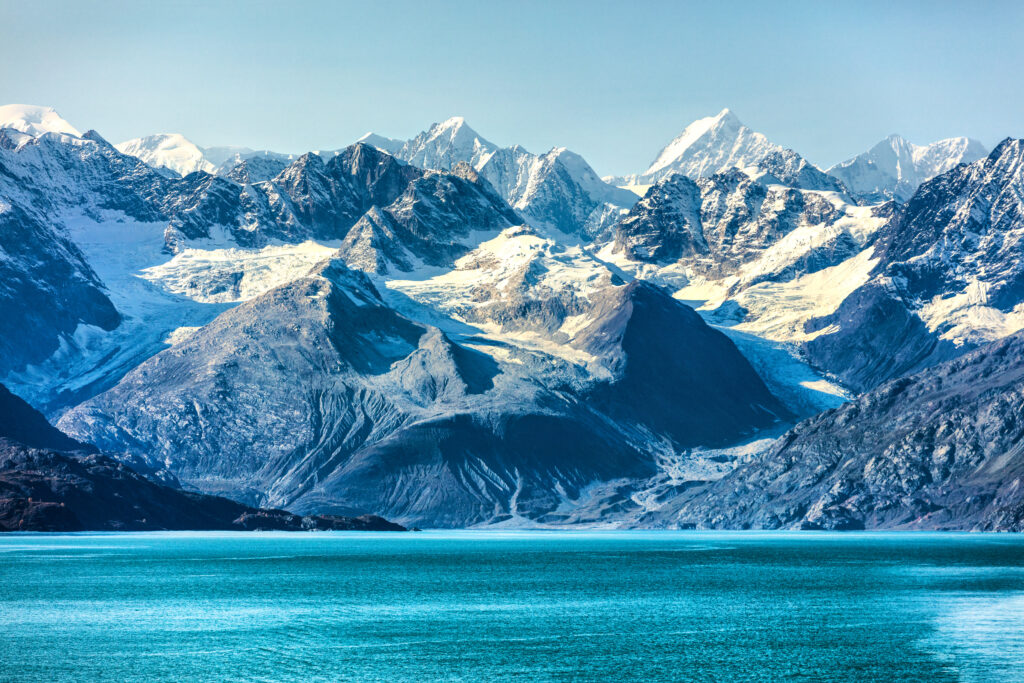
Glacier Bay National Park in Alaska could not be harder to get to.
Only accessible by boat or by a small floatplane to the nearest city of Gustavus, this is a stunning US national park that takes a bit of planning, coordination, and even luck to visit.
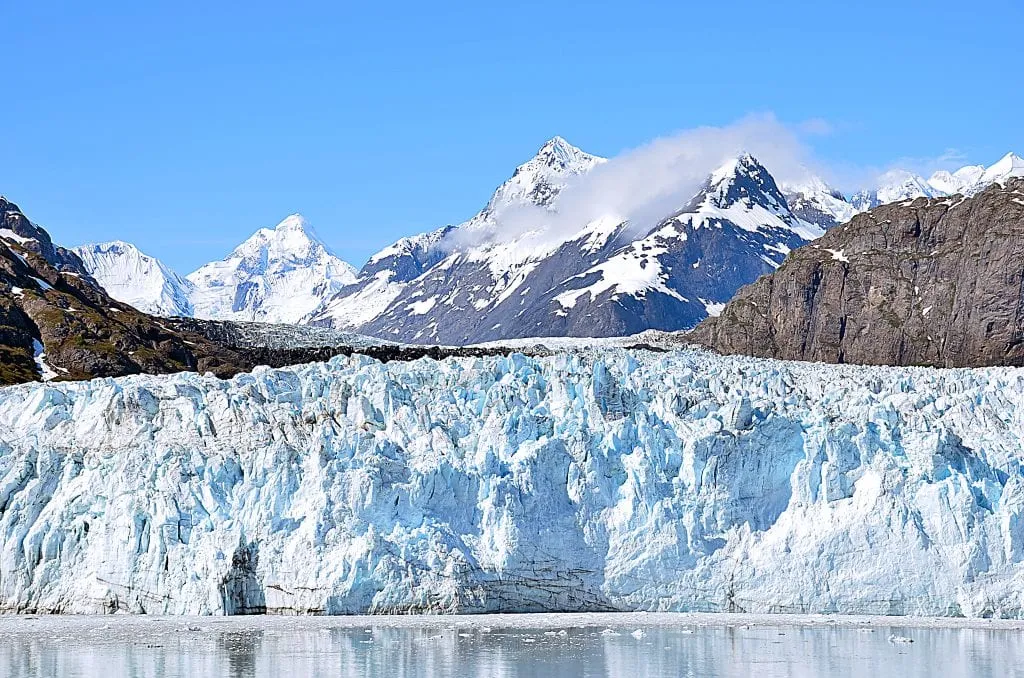
However, the scenery and wildlife are amazing. Icebergs are floating all over the bay, and a few dozen seals, sea lions, and otters can be found in their own little colonies on top of the icebergs.
One can also see the majestic glaciers that gave the national park its name, and if you listen closely enough, you can hear the rumbling as some of them prepare to calve.
Unlike many of the best national parks in America, the hiking is not the star of the show here. However, there are still several trails in Glacier Bay National Park that you can access if you’re lucky!
When to Visit
The best time of the year to visit Glacier Bay National Park is during the height of summer, when long days and the best weather of the year make the park ready to explore.
Summer is also when a limited number of Alaska cruise ship itineraries can access this beautiful US national park. However, sometimes the ice may be a bit too thick, even during summer, so cruise ships may change their itineraries at the last minute.
Alternatively, independent travelers can make their way to Gustavus, find a boat tour, and see more of the park than regular cruise ship visitors do.
Grand Teton National Park, Wyoming
From James Ian of Travel Collecting
Grand Teton National Park is not only one of the most beautiful national parks in the United States, but it also boasts a wide variety of exciting places to visit.
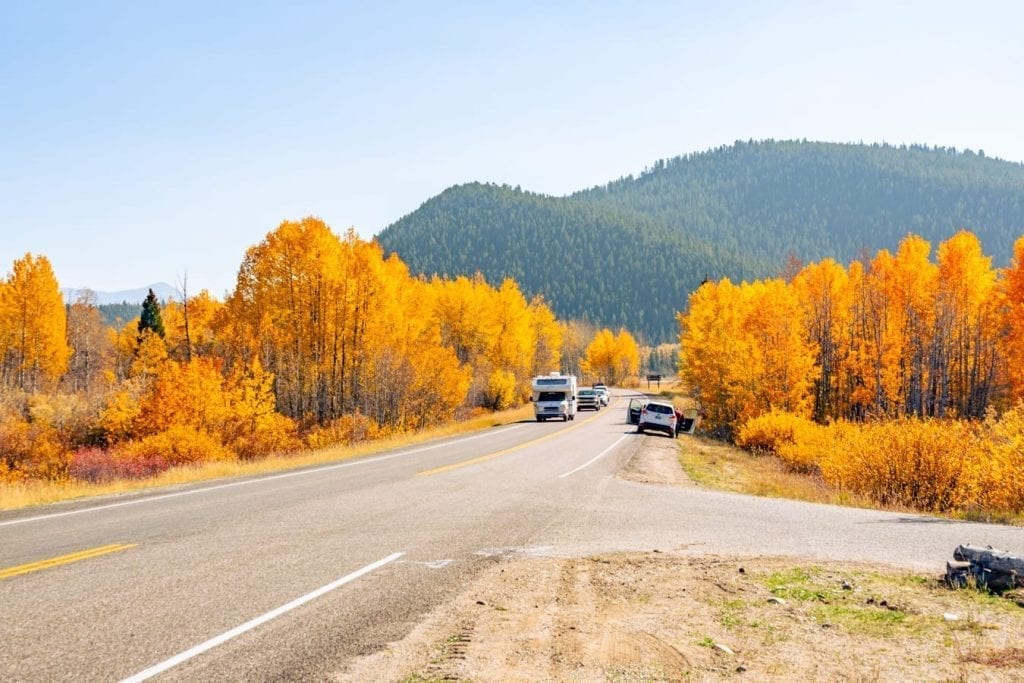
One of the most iconic things to do in Grand Teton National Park is drive the 42-mile loop that traverses the main length of the range along the inner Park Road and then the outer main road.
There are stops at Jenny and Jackson Lakes, plus an available detour up Signal Mountain for a stunning bird’s eye view of Jackson Lake.
Other famous viewpoints along the way include Oxbow Bend, where a wide bend in the Snake River creates a perfect reflection of the mountains, Snake River Overlook, and Schwabacher Landing, where you can often spot moose.
At nearby Mormon Row, the famous Moulton barns create a picture-perfect foreground for the mountain views.

There are many incredible hikes into the canyons between the peaks, though perhaps the best is Cascade Canyon, where the views are truly jaw-dropping.
Other things to do in Grand Teton National Park and nearby areas include boating, kayaking, and swimming in summer, and snowmobiling, skiing, and dogsledding in winter.
When to Visit
The best time to visit the Tetons is in the spring (April-June) and fall (September-October). This area gets a lot of snow in winter, closing the inner road, and summer can be very crowded.
However, if you like winter sports, the surrounding area is a winter wonderland that you will love.
Grand Teton National Park is located next door to Yellowstone National Park, and we highly recommend visiting both parks on the same trip if you can!
Cuyahoga Valley National Park, Ohio
From Michelle of Moyer Memoirs Travel Blog
Cuyahoga Valley National Park was declared a national park in 2000, but years later, it remains a little-known secret treasure among the many beautiful national parks in the USA.
It spans 32,000 acres along the Cuyahoga River between Cleveland and Akron, Ohio, and boasts miles of beautiful hiking trails.
The most notable trail in the park is the Ohio & Erie Canal Towpath Trail, which includes 20 miles of pristine pathways that are perfect for hikers and bikers.
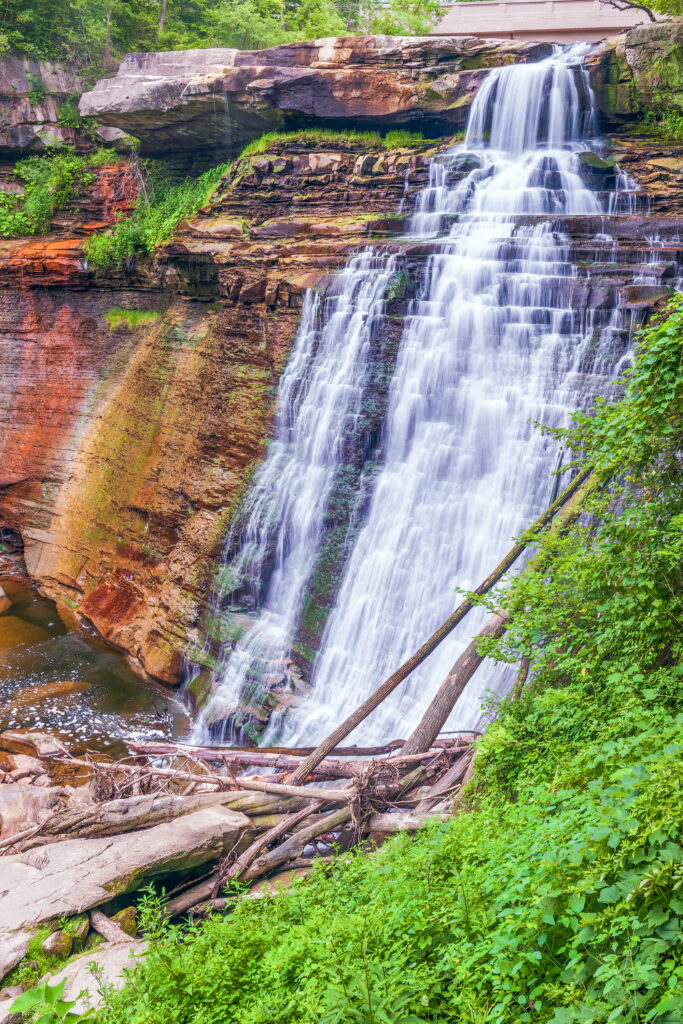
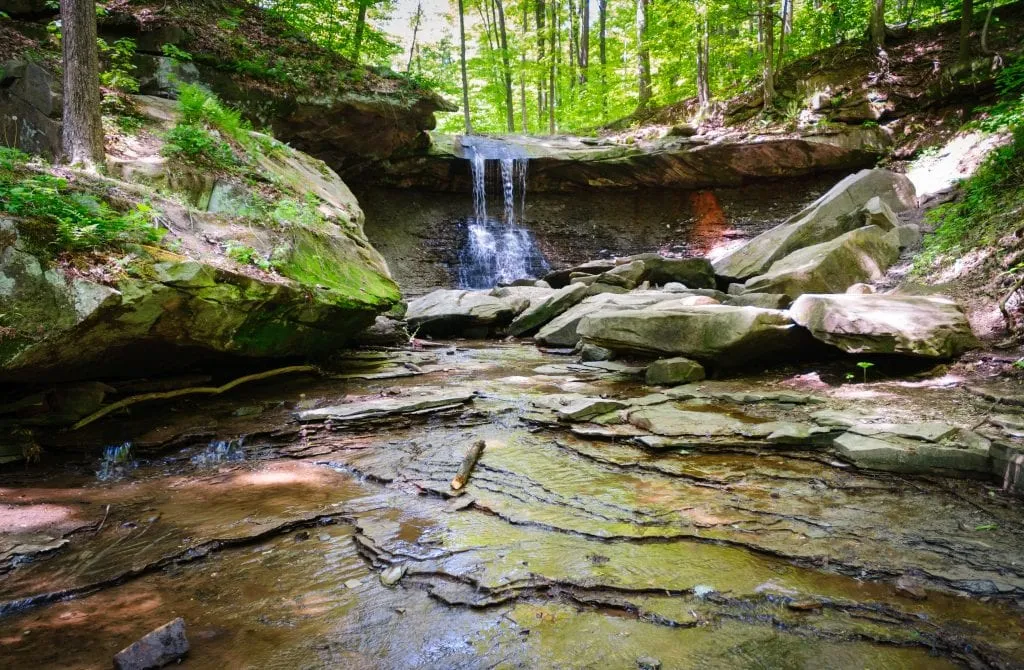
There are two iconic sites located within the park that are not to be missed on any visit. The first is a beautiful 60-foot waterfall, Brandywine Falls, that can be seen from both a boardwalk overlook and a lower viewing platform.
The second site is the Ritchie Ledges.
This area is packed with rocks and crevices formed from the glacier grooves millions of years ago, and it can be explored via a 1.8-mile trail that travels around and down into the sandstone cliffs.
When to Visit
Cuyahoga Valley is a year-round national park. Spring flowers and fall foliage both bring particular reasons to visit.
For a different but memorable trip to Cuyahoga Valley National Park, visit in the winter when the snow blankets the park.
During the holidays, the park runs the Polar Express in conjunction with the Cuyahoga Valley Scenic Railroad.
Indiana Dunes National Park, Indiana
From Sara of Cernys’ Journeys
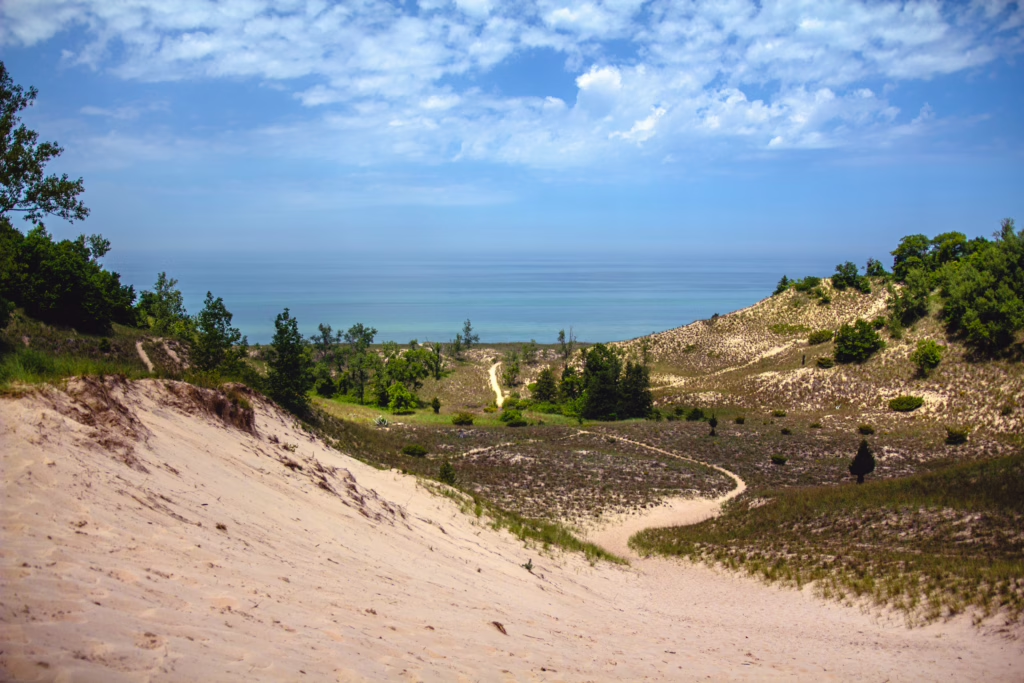
Indiana Dunes National Park is one of the newest national parks in America (designated in 2019), and it is not to be missed! There are year-round activities for the whole family to enjoy here.
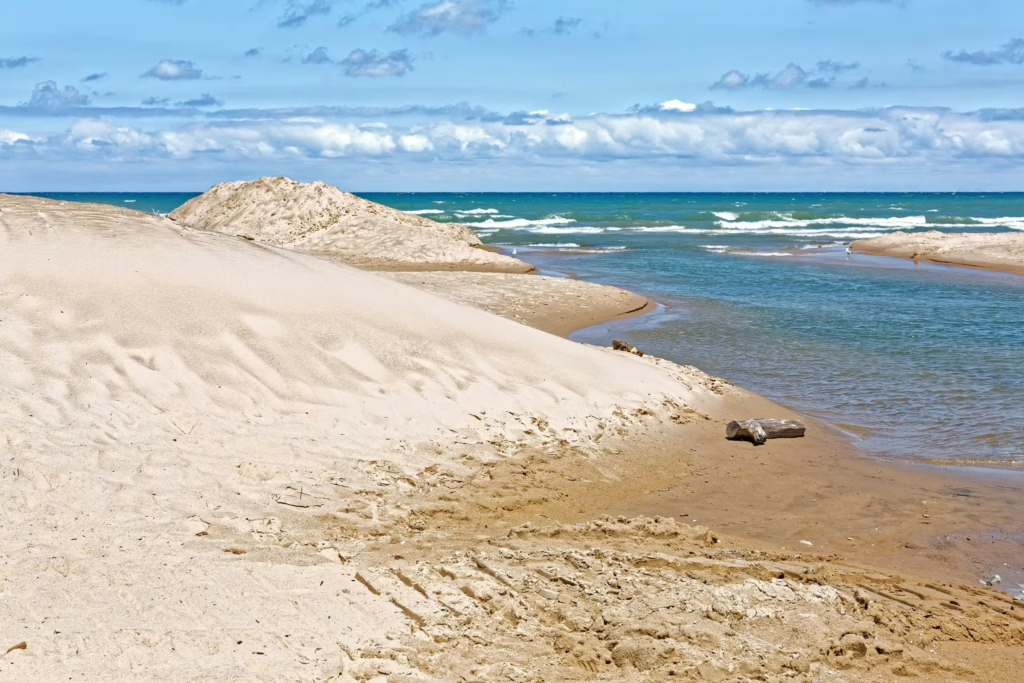
A beach day spent relaxing on the shores of Lake Michigan is a must for locals and tourists alike. Getting to the park early is recommended, as parking can be difficult if you arrive later in the day.
Hiking is a favorite year-round activity at the park. There are over 15 miles of trails, so be sure to decide which trails are best for you before arriving at the park.
Cowels Bog Trail is the longest at approximately 5 miles and probably the most challenging, but also most rewarding, trail. The terrain has you trekking through ponds, marshes, swamps, and forests, and then arriving at the beach.
Winter activities include snowshoeing and cross-country skiing. Make sure to bring warm coats and gloves, as the lake tends to make the park colder than surrounding areas during the winter months. The park provides free snowshoe and ski rentals on a first-come, first-serve basis at the Paul H. Douglas Center for Environmental Education.
Even if you are not renting any equipment, you should still stop by the Paul H. Douglas Center for some additional seasonal displays, activities, and freebies that the park may offer during your visit.
Indiana Dunes National Park is located 45 miles east of Chicago, so it makes a great day trip or weekend trip for those in the area.
When to Visit
Summertime is the most popular time to visit, as it is known to have some of the best beaches in the Chicagoland area. However, locals visit year-round.
Gateway Arch National Park, Missouri
From Sarah of Travels of Sarah Fay
Thanks to iconic photographs of the arch along Route 66, St Louis’ Gateway Arch has long been one of the most famous stops for cross-country road trippers.
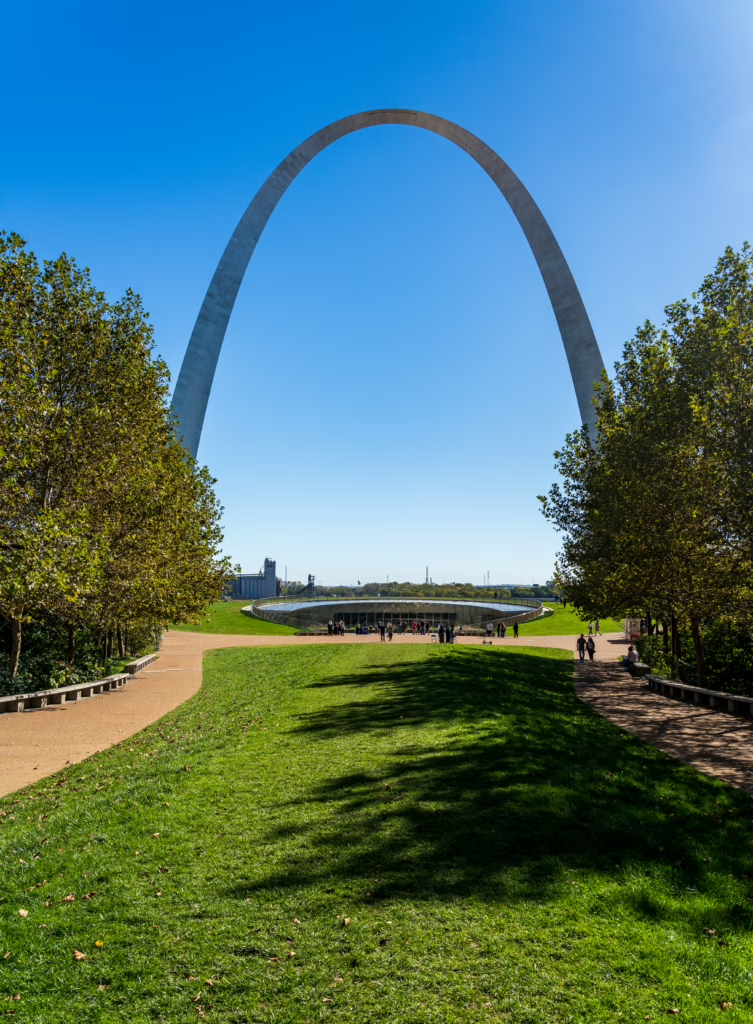
On February 22, 2018, Gateway Arch’s 91-acre property was designated the 60th National Park. After the $380 million-dollars of renovations, Gateway Arch National Park has become the top place to visit in St. Louis, Missouri.
The creation of walking trails on St. Louis, Missouri’s waterfront, a superb American History Museum, and amphitheater, make sure the park and city will keep you busy beyond just going up to the top of the arch… but of course, that remains the star of the show!
The Arch was made to commemorate the 19th century western expansion of the United States. It took 7 years to complete, around 43,000 tons of steel, and cost $13 million dollars to complete in 1967.

It’s the largest man-made arch in the world, and visitors can take the 4-minute ride to the top via tram to the 630-foot viewing area.
On a beautiful day, you can see as far as 30 miles from the top of the Arch. As one of the only national parks located in an urban setting, this is definitely one of the most unique national parks in the USA!
From the Arch, you can see the Old Court House, which is where the infamous Dred Scott trial was held in 1857, in which an enslaved man sued for his freedom, and where suffragist Virginia Minor attempted to register to vote in 1872.
When to Visit
The best time of year in terms of weather to visit the Gateway Arch National Park in the summer.
However, to avoid the crowds, it’s best to visit the arch first thing in the morning before lines develop to take the tram to the top.


a great article with a lot of interesting information… regards from Israel